
Salt, sand and snow: The environmental costs of winter safety
With the fluctuating temperatures of late winter, roads and walkways continue to be treated with salt and sand to improve safety. But what happens to all that excess material after a long winter?
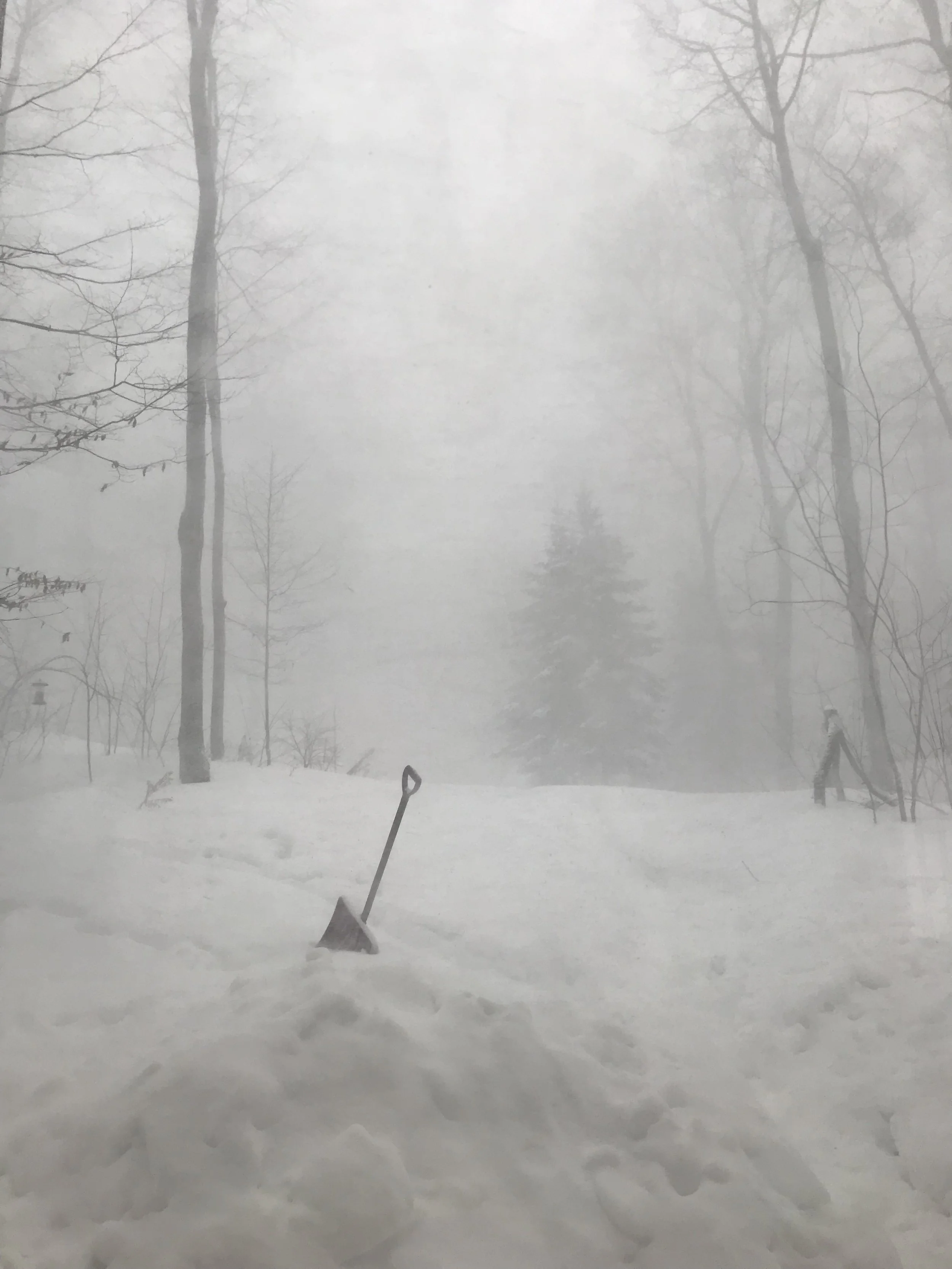
Snowy landscapes require thoughtful management practices - for both people and ecosystems.
Winter in eastern North America can be a wild ride! Snowstorms, ice storms, mid-winter thaws, and even the occasional thundersnow keeps us busy shovelling, snowblowing, plowing, salting and sanding for nearly half the year. Salt helps break up icy patches while sand gives us traction beneath our tires and boots.
Both materials remain on the land long after the snow melts, lingering in soils, waterways and ecosystems. What effects do these materials have on the ecosystems where they’re applied?
Let’s start with salt - the most widely used de-icing material on roads and highways, and one we commonly apply to our own walkways and front steps. Canada uses about 4.75 million tons of salt per year in winter maintenance (Brandt, 2026).
How does it work?
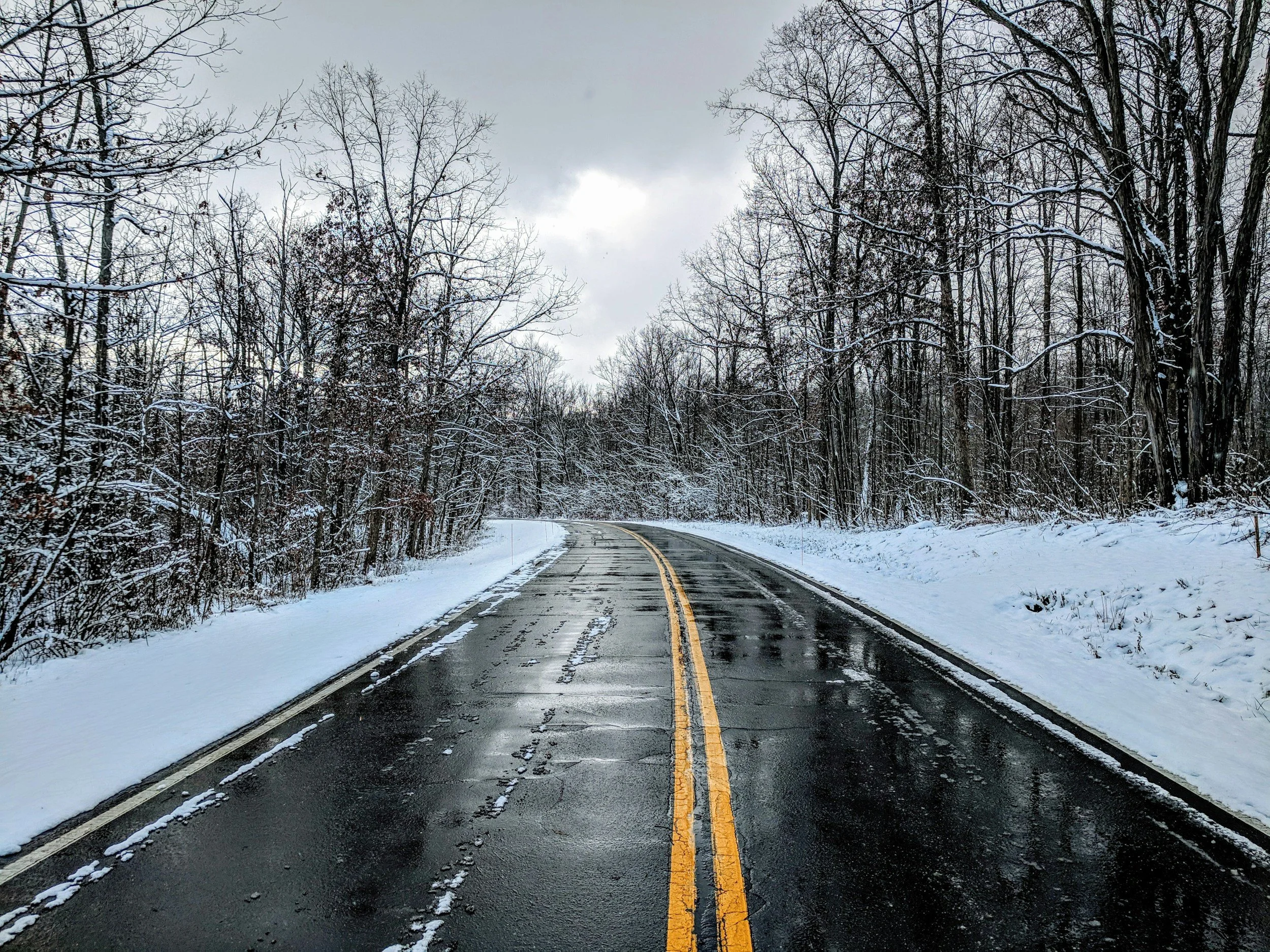
When water temperatures drop below 0℃ (the freezing point), water molecules bond together to form ice. When temperatures rise above 0℃, those bonds weaken and the ice returns to liquid water. Salt disrupts the bond between water molecules and lowers the freezing point to about -21℃ (Dugan & Arnott, 2023), allowing ice to melt and slowing the formation of new ice. This helps to temporarily reduce hazardous conditions.
However, salt does not disappear after it’s been applied. It persists in the environment, where high concentrations can have negative effects on terrestrial and aquatic ecosystems.
Terrestrial ecosystems
Elevated salt concentrations alter the chemical composition of soils, changing their structure and nutrient balance. These changes can stress vegetation and sometimes lead to plant death.
When salt (sodium chloride) enters the soil, it breaks down into ions. Plants may take up these ions through their roots instead of the nutrients they need for survival. Depending on the concentration, this can result in wilting, stem dieback, stunted growth, discoloration and death. Some plants have a higher tolerance for salt concentration than others and have a better chance of surviving next to roads or salted walkways. These plants can help buffer salt impacts by taking up ions before they reach groundwater.
The following are examples of native plants with moderate to high salt tolerance:
Perennials and grasses
Columbine (Aquilegia canadensis)
Common milkweed (Asclepias syriaca)
Lance-leaf coreopsis (Coreopsis lanceolata)
Virginia wild rye (Elymus virginicus)
Switchgrass (Panicum virgatum)
Penstemons (Penstemon spp.)
Black-eyed Susan (Rudbeckia hirta)
Little bluestem grass (Schizachyrium scoparium)
Sand dropseed (Sporobolus cryptandrus)
Goldenrods (Solidago spp.)
New England aster (Symphyotrichum novae-angliae)
Hoary vervain (Verbena stricta)
Golden Alexanders (Zizia spp.)
Shrubs and trees
Black chokeberry (Aronia melanocarpa)
New Jersey tea (Ceanothus americanus)
Red osier dogwood (Cornus sericea)
Witch hazel (Hamemelis virginiana)
Spicebush (Lindera benzoin)
Ninebark (Physocarpus opulifolius)
Oaks (Quercus spp.)
Sumacs (Rhus spp.)
Black elderberry (Sambucus canadensis)
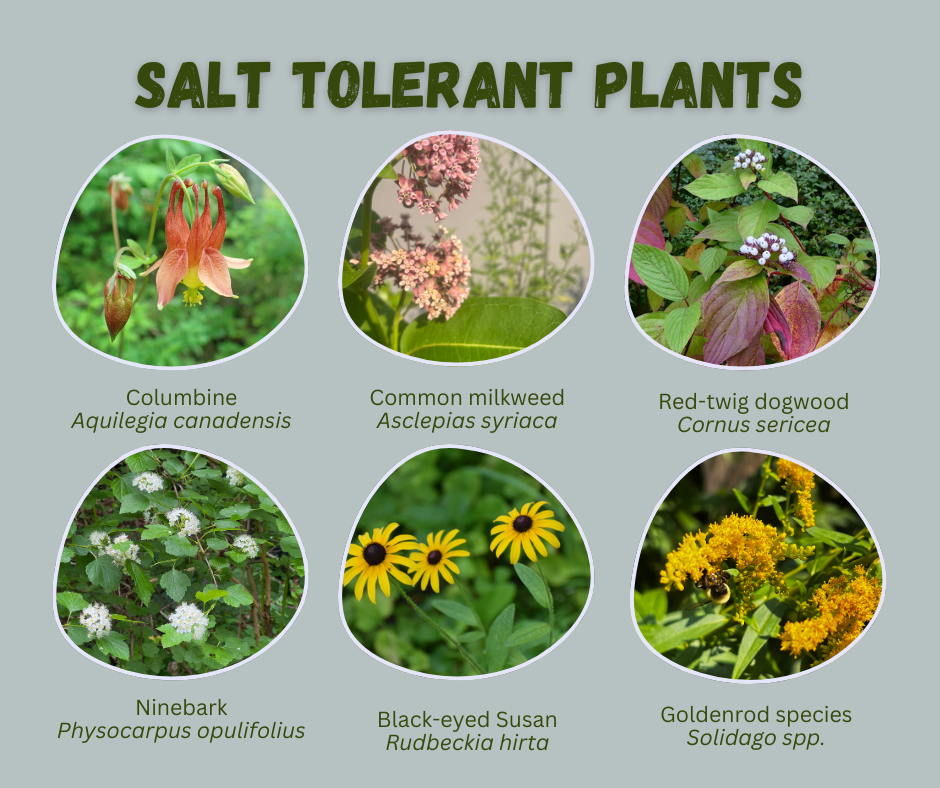
A sampling of plants that will adjust well to salty conditions along walkways and roads.
Below-ground communities become disrupted as well. Soil microorganisms (bacteria, fungi and other microscopic life) and macroorganisms (earthworms, beetles and other invertebrates) play a crucial role in soil health, breaking down organic matter, recycling nutrients and supporting plant growth. Elevated salt levels can disrupt these communities, affecting the health of the entire soil ecosystem.
Aquatic ecosystems
Salts travel with water - directly into nearby creeks, rivers and lakes, travelling distances via storm sewers, or seeping through soils into groundwater reservoirs. Most of the salt applied to roads and walkways ultimately ends up in our waterways. High concentrations can negatively affect freshwater organisms and nutrient cycling within the water body, disrupting food webs and ecosystem health.
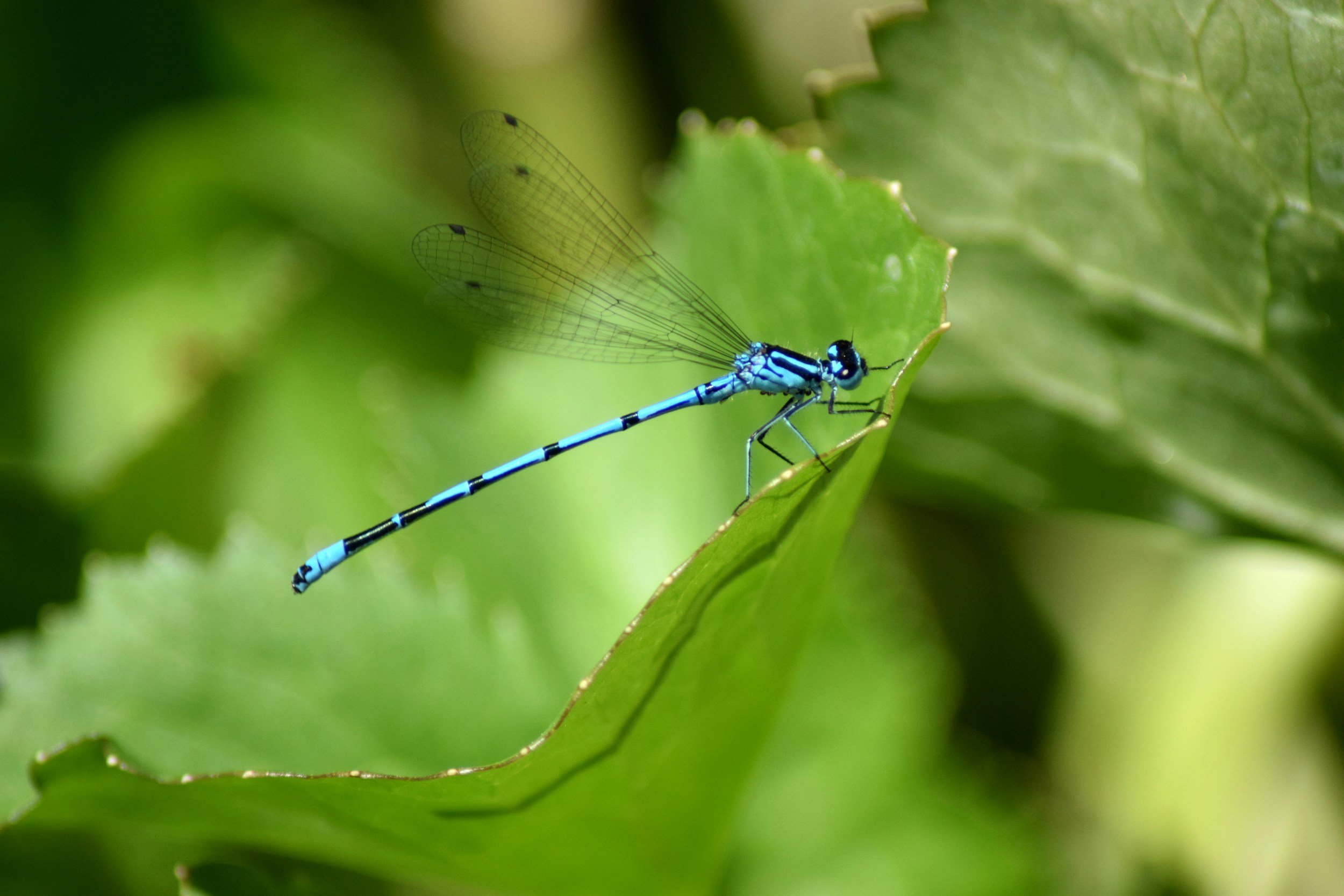
Zooplankton, some of the smallest freshwater organisms and critical members of aquatic food webs, are especially sensitive to high concentrations of salt - particularly to the chloride in salt. If chloride concentrations are high, plankton mortality rates rise (Ontario Tech University, n.d.). This not only causes ripple effects throughout the food chain, negatively affecting animals that are higher up, but can also cause increases in algal populations, reducing water clarity and oxygen levels. Fish and amphibians that rely on clear, oxygenated water suffer, and declines can also be seen in dragonfly, damselfly and frog populations.
Salt isn’t the only material used for winter safety. Sand and other abrasives are also commonly applied to keep our sidewalks, driveways and roads safe in winter.
How does it work?
Sand acts as an abrasive on top of the ice, increasing traction rather than melting ice. Gravel, woodchips and kitty litter can also be used in a similar way. Like salt, these materials persist in the environment after the snow melts. Unlike salt, they don’t dissolve in water, and therefore do not seep into groundwater. However, they can still move across the landscape, onto vegetation and into waterways. In large amounts, fine materials like sand can increase turbidity in waterbodies, causing negative impacts on aquatic ecosystems.
Terrestrial ecosystems
Gritty particles can settle on or around vegetation, effectively smothering more sensitive plant species, while also clogging stormwater drains. Without removal, some plants may die or be displaced, and stormwater movement can be blocked.
Aquatic ecosystems
When sand particles wash downslope into waterways, increased turbidity and decreased oxygen levels can result. Small streams may become clogged, and fish spawning habitat can be affected.
What should we do?
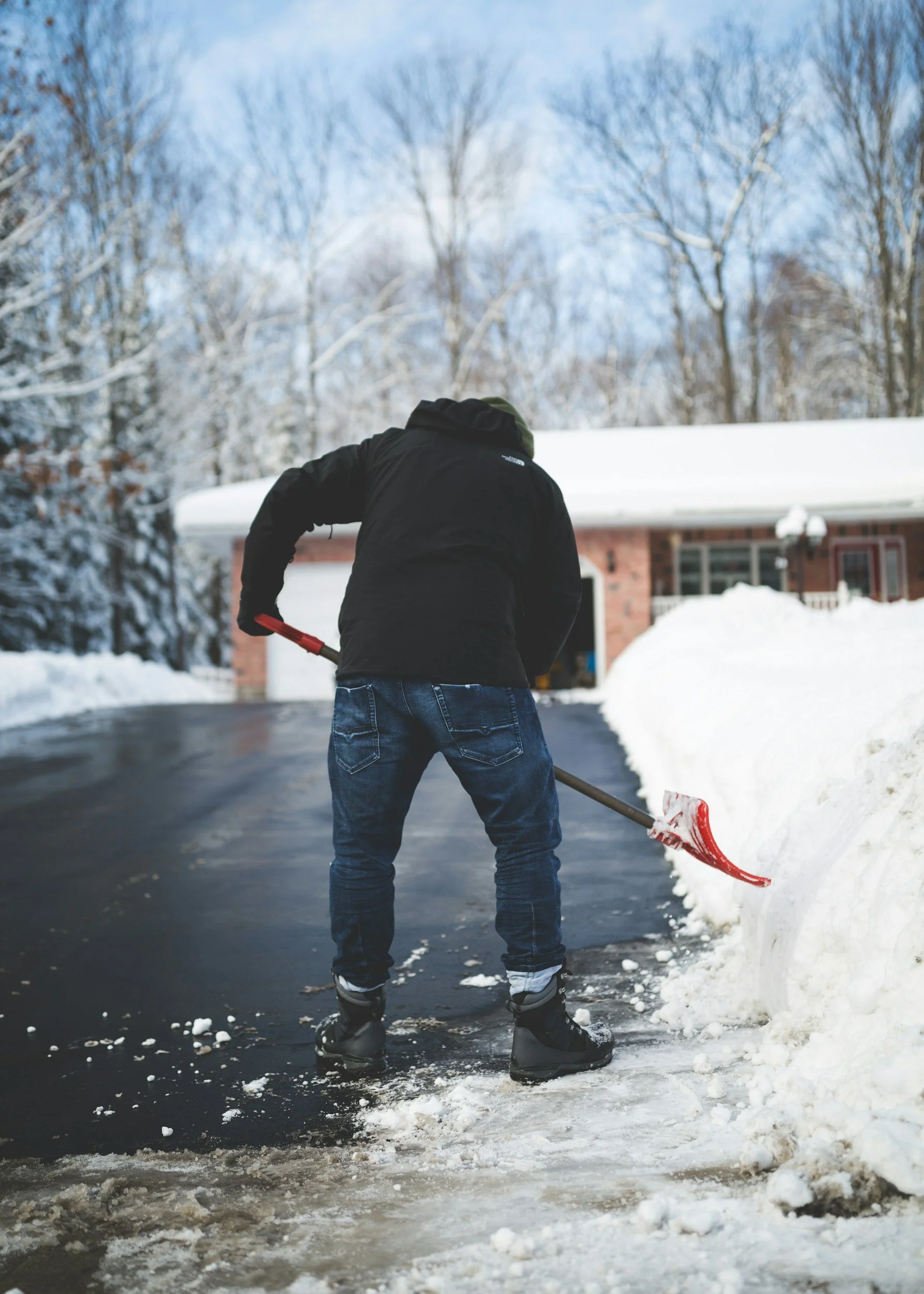
Smarter use of salt and sand can maintain safety while protecting ecosystems. When it comes to roadway management, we can educate ourselves about the risks of salt and sand use, and encourage our municipalities to take ecology into consideration when making winter maintenance decisions.
Some municipalities are already experimenting with improved winter management strategies, including calibrated salt spreaders, pre-wetting salt brine, and reduced application rates.
Water Rangers offers a Winter Testkit for purchase, if you’d like to monitor a waterbody near you for road salt contamination.
At home, we can do a lot. It starts with thinking about snow management from an ecological perspective, and consciously making small changes in how we manage it on our landscapes;
Shovel first: Manually remove as much snow and ice as possible before applying any material.
Use less salt: A little goes a long way - one coffee cup (350 g) is enough salt for 10 sidewalk squares or a one-car driveway (500 sq ft).
Try alternatives: Where possible, use abrasives (sand, gravel, woodchips, kitty litter, etc) to reduce the use of salt.
Sweep it up: Whether you’re using salt, sand or a combination, sweep up the excess and keep it in a container for future use. This will help minimize the negative effects on nearby terrestrial and aquatic ecosystems.
Plant salt-tolerant species: Native plants that tolerate salt not only have a better chance of surviving, they also help buffer the impact of salt near roads and walkways.
Add organic matter: Organic matter amendments (compost, leaves, etc) improve structure, pH and cation exchange capacity in soils after they have been exposed to salt. These improved soil conditions support better plant and microbial growth (Brandt, 2026)
Each ecosystem is unique and should be taken into consideration when deciding which materials to use. Is this particular waterway sensitive to the addition of sand or to salt? Will it disrupt the existence of certain species or the food web altogether? Can the vegetation surrounding the treated area tolerate additional salt?
There is a common perception that more salt equals more safety. This belief often leads to oversalting of parking lots, driveways and walkways out of concern about liability or injury. But as chloride levels continue to rise in our lakes, rivers and groundwater, it’s becoming clear that we need to use less.
Winter safety and ecological health don’t have to be at odds. With thoughtful management, smarter materials and a bit of awareness, we can keep our communities safe while protecting the ecosystems that surround us.
Book an ecological assessment of your landscape and find out which native plants will be able to thrive along your driveway or sidewalk.
Resources:
Ottawa Riverkeeper - Road Salt and Freshwater Organisms
Queen’s University - Why Do We Keep Using Road Salt?
Smart About Salt - Winter Salt Management Program
Watersheds Canada - Road Salt Pollution Slide Deck
Watersheds Canada - Salt Tolerant Native Plants for Eastern Ontario
Water Rangers - Winter Testkit
—
Dugan, H. A., & Arnott, S. E. (2023). The ecosystem implications of road salt as a pollutant of freshwaters. Wiley Interdisciplinary Reviews: Water, 10(2), e1629. https://wires.onlinelibrary.wiley.com/doi/pdfdirect/10.1002/wat2.1629
Brandt, J.P.(2026). Government of Canada, Natural Resources Canada, Canadian Forest Service. Salt damage. https://tidcf.nrcan.gc.ca/en/diseases-and-damage-caused-by-other-agents/factsheet/10
Ontario Tech University. (n.d.). Researchers say excessive chloride use is assaulting our lakes and rivers. News and Announcements. https://news.ontariotechu.ca/archives/2022/03/researchers-say-excessive-chloride-use-is-assaulting-our-lakes-and-rivers.php#:~:text=At%20nearly%20three%20quarters%20of,biomass%2C%20or%20microscopic%20freshwater%20algae
Perron, M. A. C., & Pick, F. R. (2020). Water quality effects on dragonfly and damselfly nymph communities: A comparison of urban and natural ponds. Environmental Pollution, 263, 114472. https://www.sciencedirect.com/science/article/abs/pii/S0269749119371349?via%3Dihub
Terry, L. G., Conaway, K., Rebar, J., & Graettinger, A. J. (2020). Alternative deicers for winter road maintenance—A review. Water, Air, & Soil Pollution, 231(8), 394.