
How do plants send their seeds out into the world? Here's a simple breakdown of how seeds move, why so few survive and an easy way we can help native plants thrive.
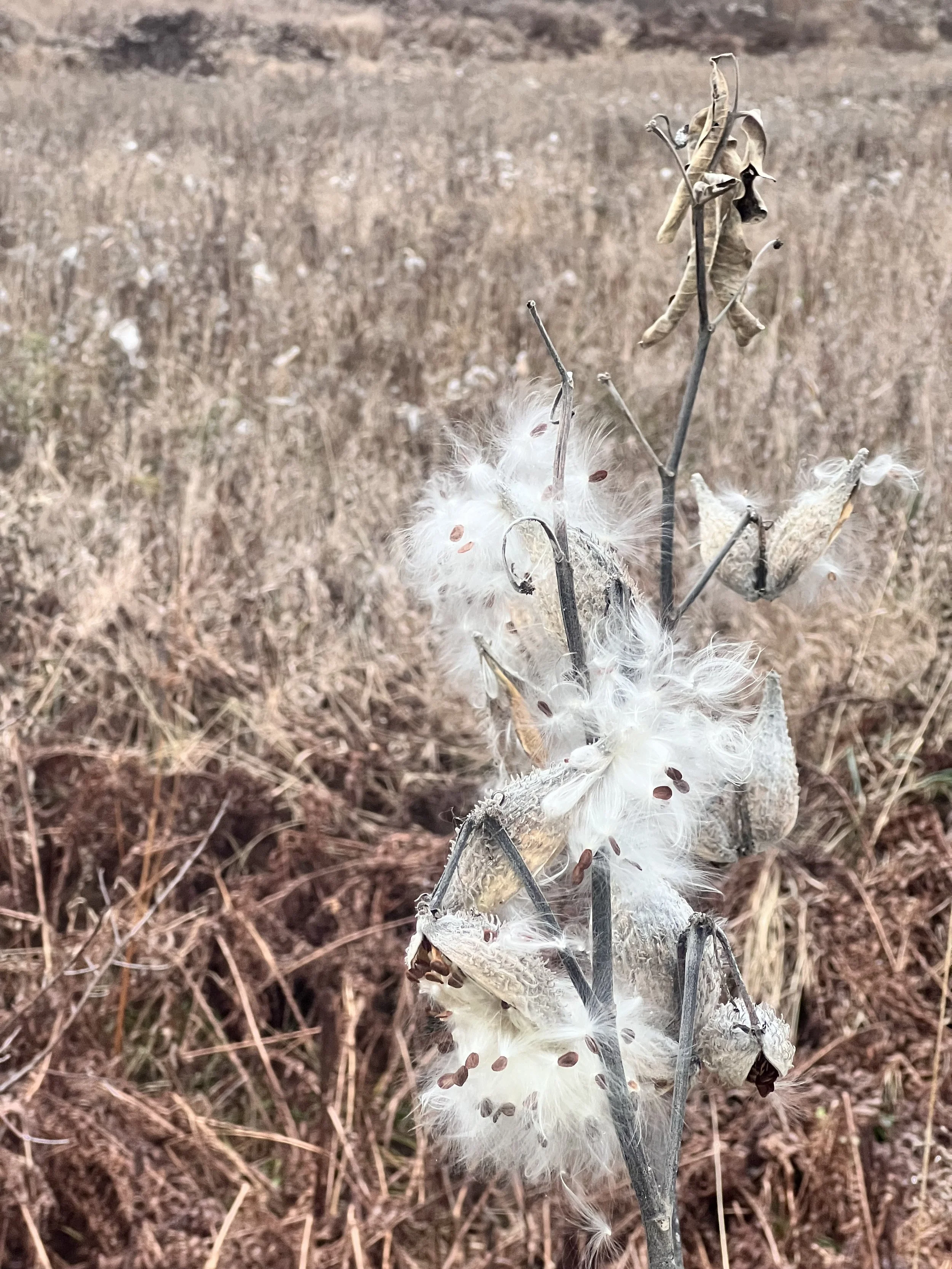
Fluffy fall seed adaptations of common milkweed (Asclepias syriaca).
Plants are fascinating creatures; they get their energy directly from the sun and convert it through the complex process of photosynthesis. These primary producers go on to supply almost every other living being with energy. Some of that energy is reserved for reproduction, through seed making, in order to continue their populations.
Seeds are just as fascinating as the plants themselves! They come in many different forms, from berries and nuts to tiny specks you can barely see. And just as interesting as their diversity is the variety of seed dispersal mechanisms. Since plants can’t move on their own, they’ve evolved strategies to send their progeny to new locations. Each plant has determined (through evolution) which method of dispersal works best for them: gravity, wind, ballistics, water or animal transport. Often, they utilize a combination of methods for a higher chance of success.
Gravity Dispersal (Barochory)
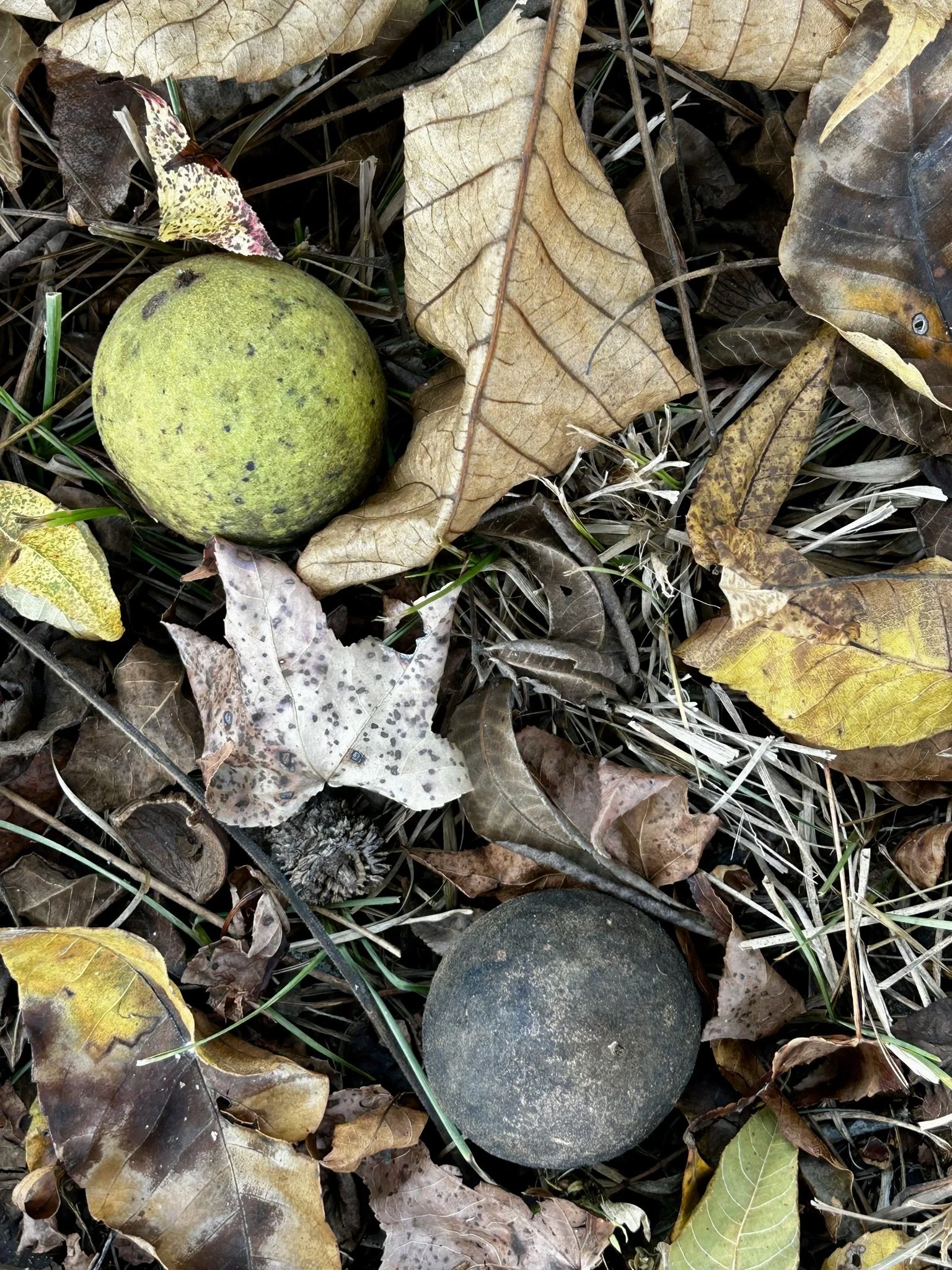
Heavy walnut seeds. © Ann Redmond, Source: iNaturalist
This is as simple as it sounds; the mother plant produces seeds that are relatively heavy when ripe, and they drop straight to the ground. This ensures they land in an optimal environment for establishment - the right soil, light conditions and plant community. Think of an oak tree and the heavy acorns that drop to the ground in late summer - causing quite a racket if a tin roof happens to be beneath the crown! While many acorns and other nuts are also transported by animals, plenty land directly below the tree where they can germinate in ideal conditions.
Wind Dispersal (Anemochory)
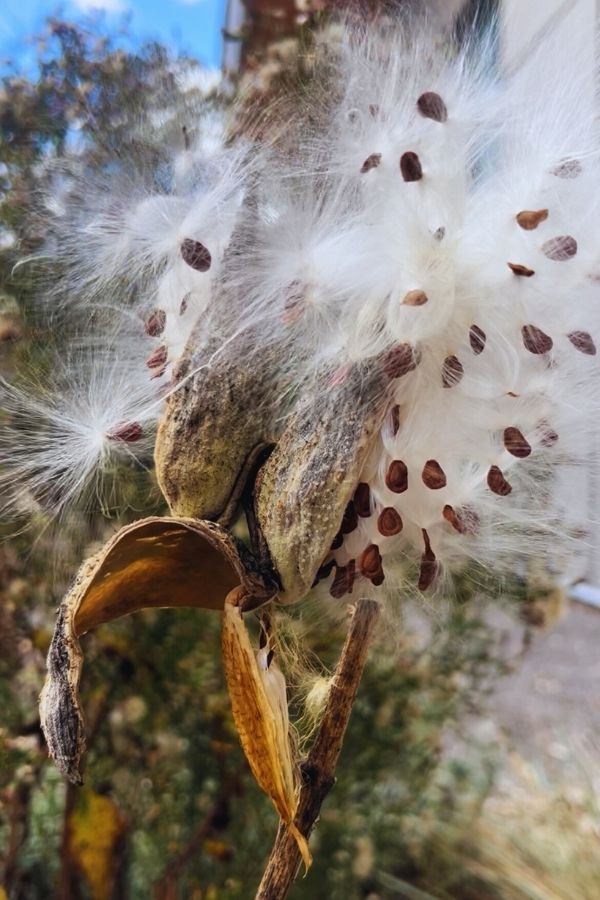
Milkweed seeds ready to catch the breeze.
This includes the fluffy seeds you see floating on the breeze and the “helicopter” samaras like those of maple trees, that spin gently away from the parent plant. These seeds are built to travel, with fluff or wing adaptations that help them catch a ride on the breeze. Plants that rely on wind dispersal must produce seeds in high numbers because many will land in less than optimal conditions. Milkweeds, asters, goldenrods and maples are a few of the many plants that use wind to disperse their seeds.
Ballistic Dispersal (Ballochory)
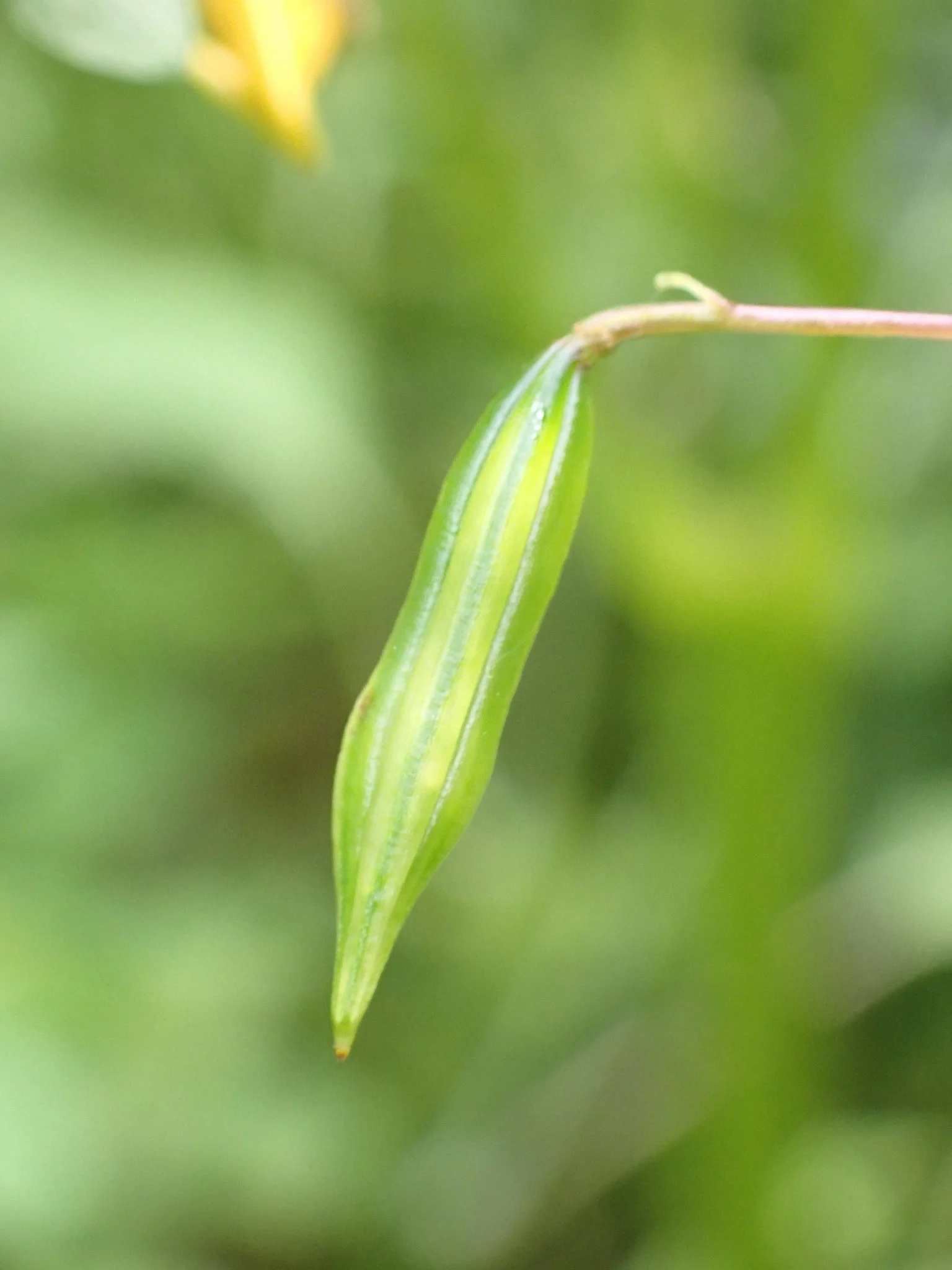
Jewelweed seed pod, full of internal pressure. © Ken Allison, Source: iNaturalist
It sounds dramatic, and if you see it happen, you’ll agree that it looks dramatic too. Impatiens capensis (jewelweed), also known as touch-me-not, is a common native species that uses ballistic dispersal to launch its seeds into new territory. This common name aptly describes what happens when ripe pods are touched - they explode! As pods mature, internal pressure builds and even the lightest contact releases it, launching the numerous seeds and ensuring they will land far from the parent plant.
Water Dispersal (Hydrochory)
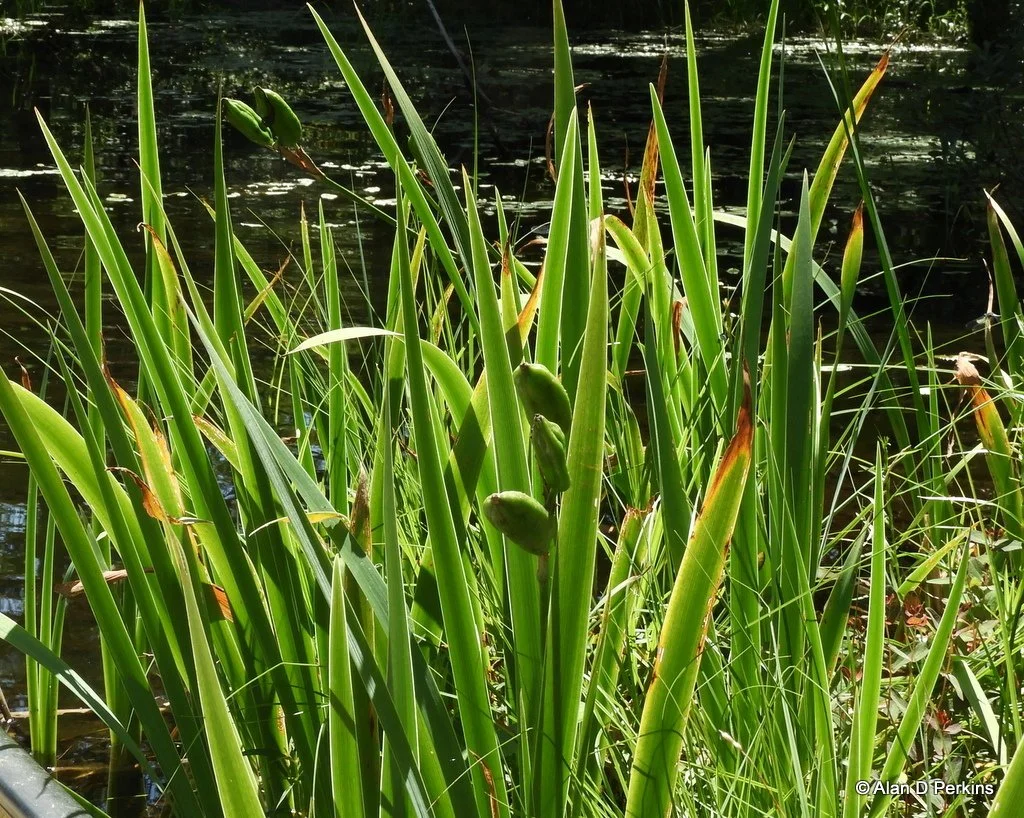
Jewelweed seed pod, full of internal pressure. © Ken Allison, Source: iNaturalist
Plants growing in riparian areas (along creeks, rivers or lake shorelines), often rely on flowing water to carry their seeds away from the parent plants, promoting genetic diversity (Nilsson et al., 2010). These seeds are typically less dense and have adaptations for buoyancy, such as air pockets or fibrous husks. Iris versicolor (blue flag iris) is one native plant that depends on water for seed movement. In some parts of eastern North America, this species is threatened due to hydrological alteration. When shorelines are modified, creeks diverted or wetlands developed, seeds can no longer travel far enough to maintain genetically diverse, and therefore more resilient, populations (NatureServe Explorer 2.0, n.d.).
Animal Dispersal (Zoochory)
Animals move seeds in two ways - on them (ectozoochory) or in them (endozoochory). Many plants produce seeds with velcro-like adaptations that hook onto the fur of passing animals. Most of us have discovered burrs stuck to our clothing after a walk - unknowingly, we’re participating in ectozoochory and are facilitating seed dispersal. Desmodium canadense (showy tick-trefoil) is a beautiful native plant, but once it goes to seed, it sticks to everything. You’ll be picking these off for days! Other plants rely on animals eating, digesting and excreting their seeds. This process breaks down the protective coating on the seed, deposits it in a new location and gives it its own convenient package of fertilizer. Birds are especially good at moving seeds to faraway locations. They’ll stop to feast on berries, nuts and perennial seeds before flying off and depositing them along their route. This is great for native plants, but unfortunately also spreads invasive plants like burning bush, buckthorn and barberry.
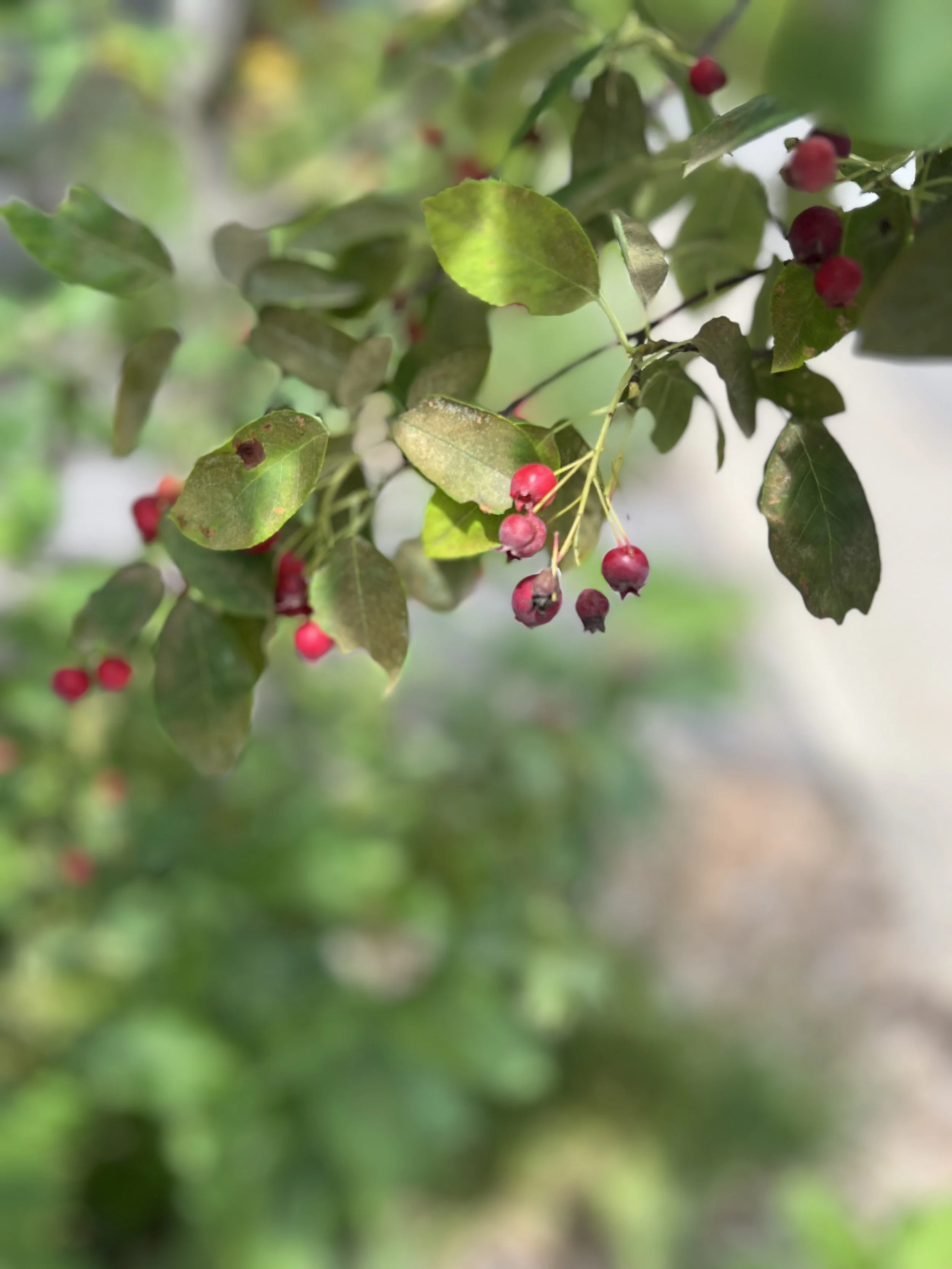
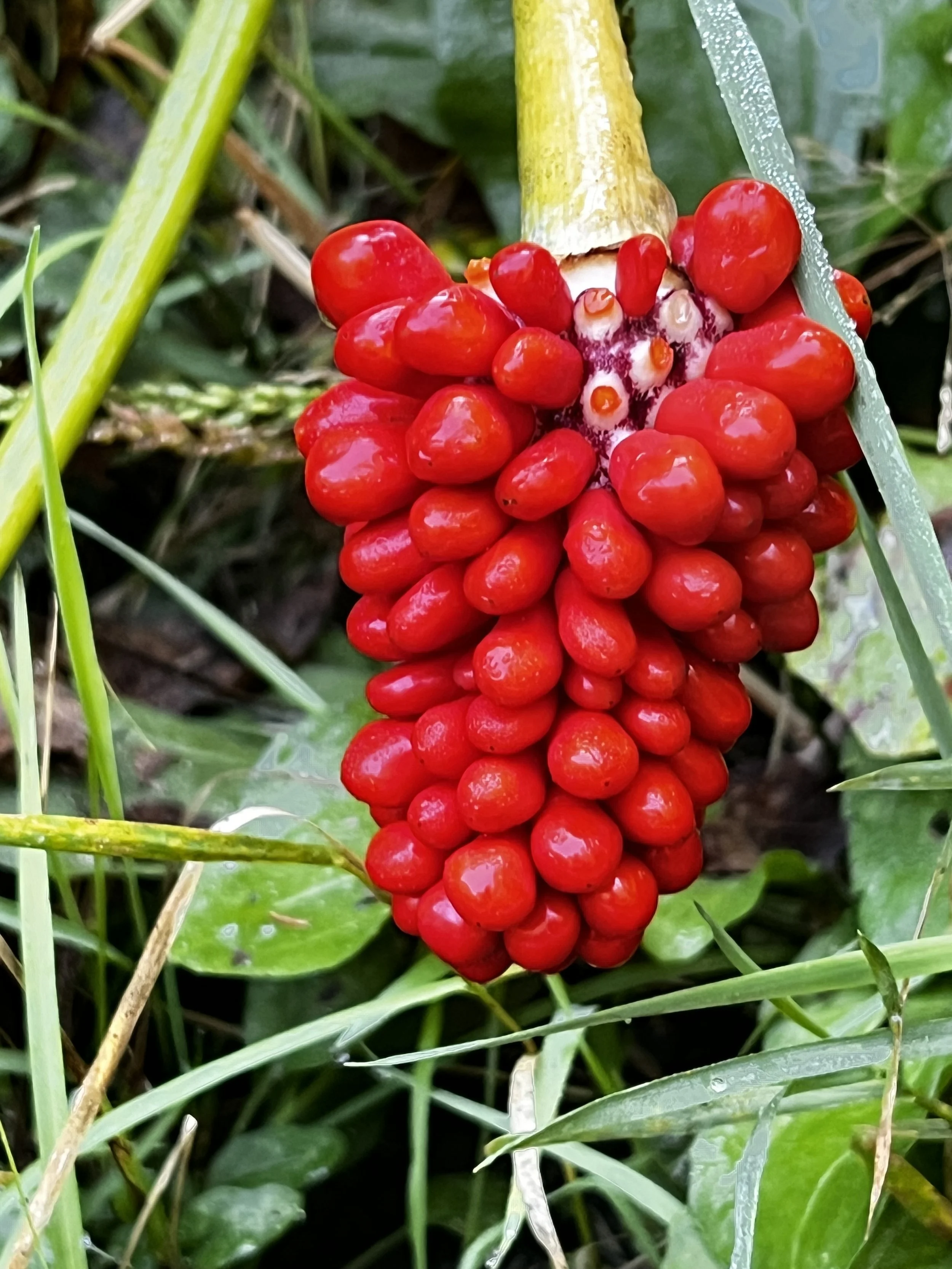
Amelanchier and Jack-in-the-pulpit berries; birds and mammals will eat and distribute their seeds.
How many seeds successfully germinate?
This depends on so many factors, it’s impossible to come up with a number or percentage. Each species has its own germination rate, influenced by biotic (living) and abiotic (non-living) conditions, climate, predation and chance. While native plants often have low germination success, invasive species, by definition, germinate and establish easily in new environments. Native plants must contend with competition, climate, their own dispersal limitations, luck, and now aggressive invasive species. These are the reasons many people have embraced the idea of helping native plants by sowing seeds at home, particularly through winter sowing. Winter sowing mimics natural conditions, helping seeds break dormancy and improving their chances of successful establishment.
*Learn more about the problems caused by invasive plants here.
Winter sowing
This increasingly popular method helps raise awareness about ecological issues and gives people a tangible way to support healthy, diverse ecosystems. Seeds are sown in the winter because many native plants require a long cold period to break down their tough seed coats. This is what happens naturally - seeds ripen in the fall, disperse and wait through winter before sprouting in spring. The prolonged cold softens the hard seed coat and prepares the seed for germination.
The process is simple and requires minimal materials. There’s no need for a big yard or a water supply.
Basic steps:
Get native plant seeds: Visit a local native plant supplier, order from a reputable online native plant source, attend a community native seed swap or visit a native seed library (see resources below).
Gather plastic containers: Almost any container will work. Clear plastic is ideal (to act as a mini-greenhouse) and at least 4” deep.
Put holes in your containers: The seeds need airflow and drainage, so make sure there are holes in the top and bottom.
Add soil: Potting soil is ideal, but any soil will work. Add 3–6” of soil and moisten it.
Add seeds: Follow instructions on your seed packet or a resource like Prairie Moon. Some seeds stay on the soil surface; others need to be buried at differing depths.
Add water: Water lightly.
Place outside: Set your containers outside, ideally where they will be covered in snow, which provides insulation and moisture.
Transplant in spring: Many of your seeds will start to germinate! Wait until they have a couple of sets of leaves before gently transplanting them into containers or your garden, or donate them to a local pollinator group so they can be planted in your community.
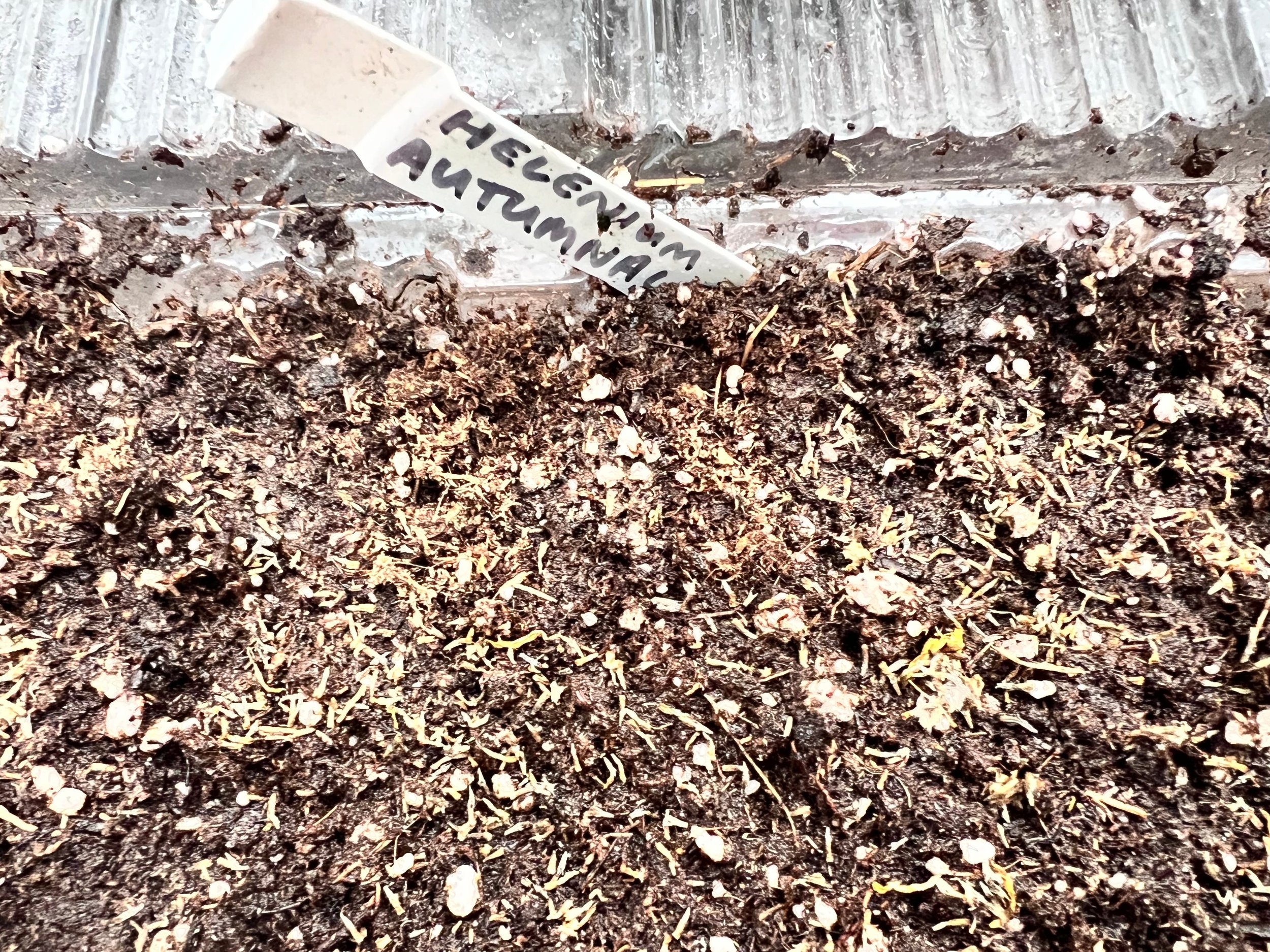
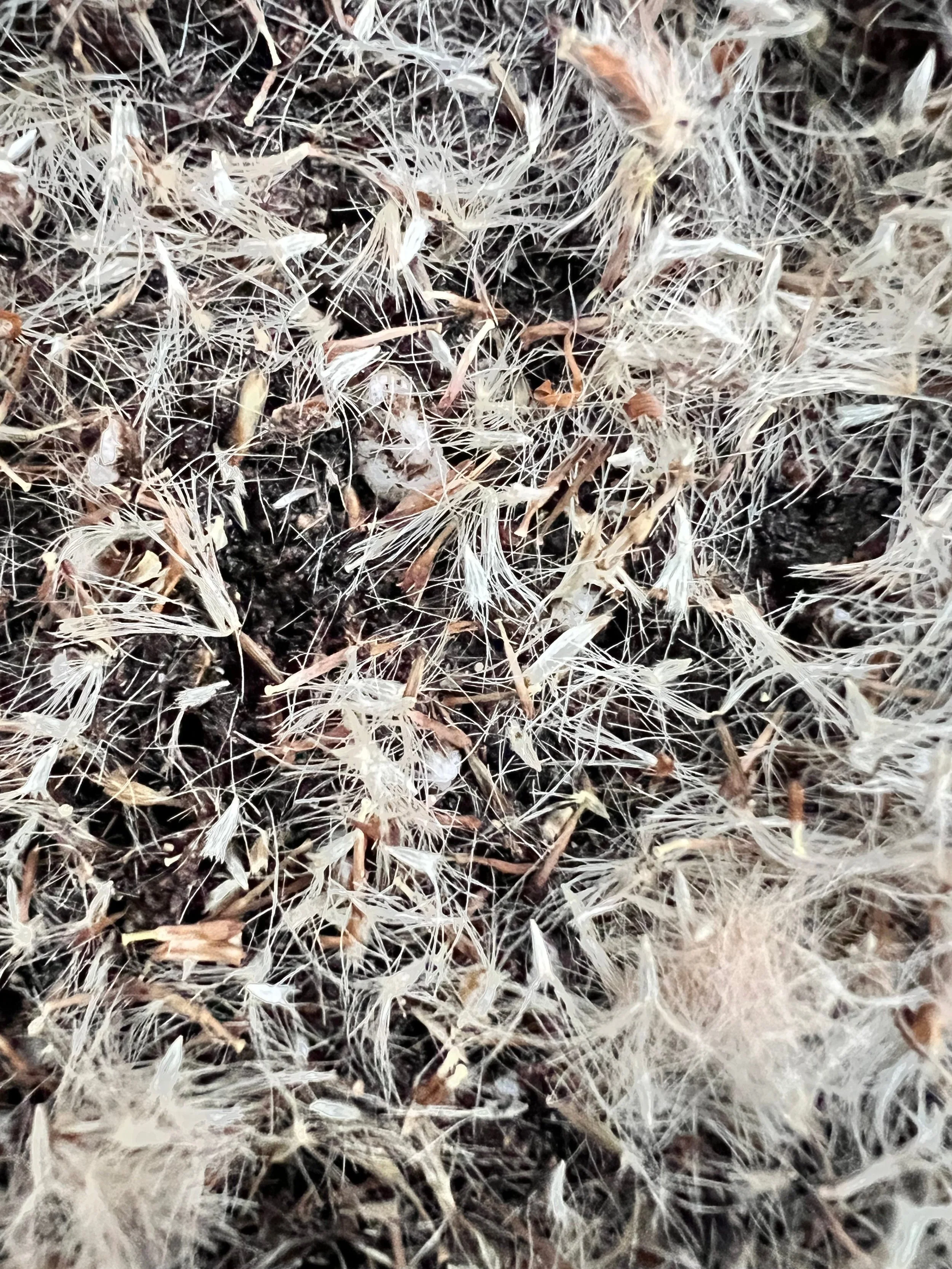
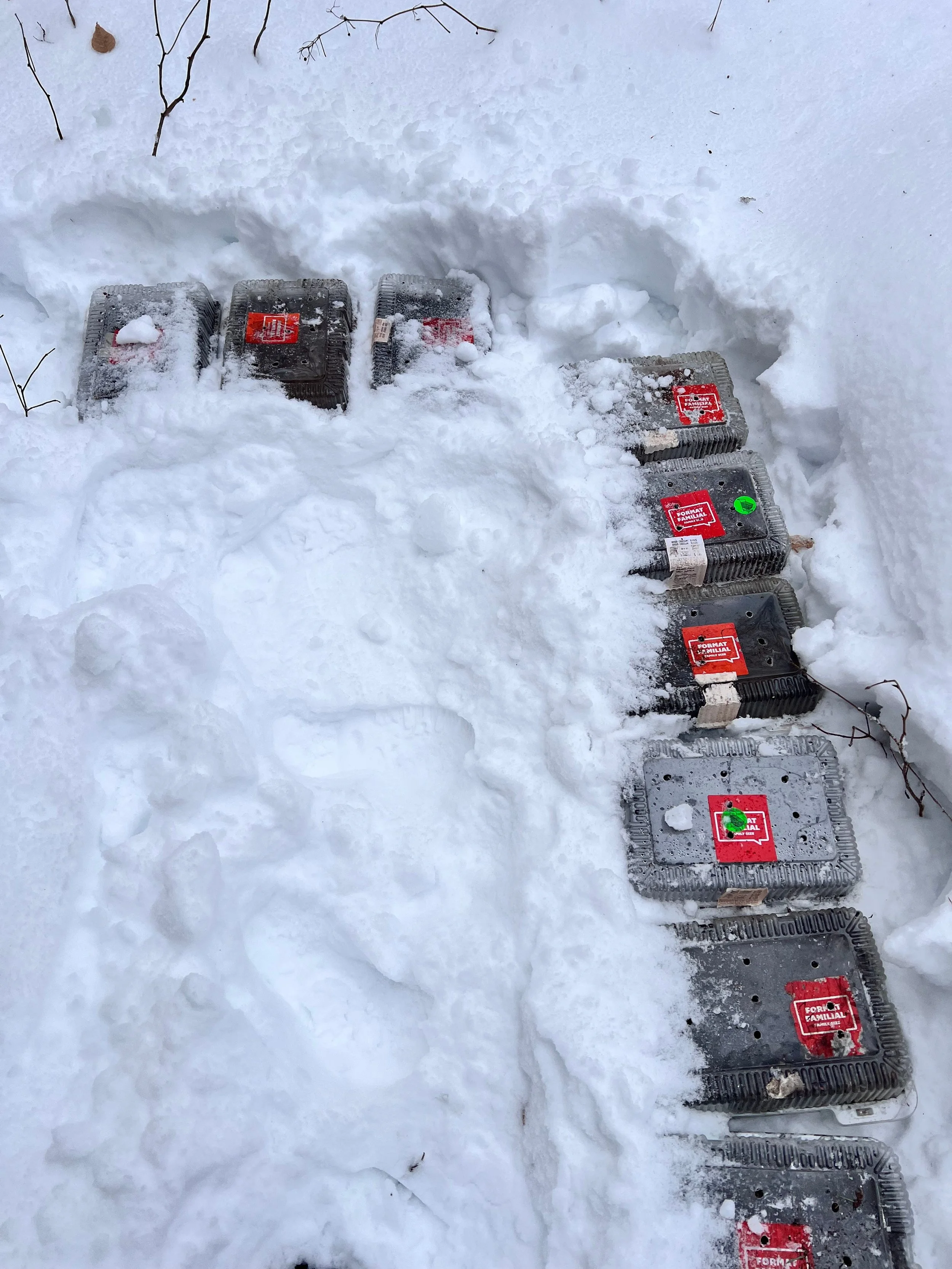
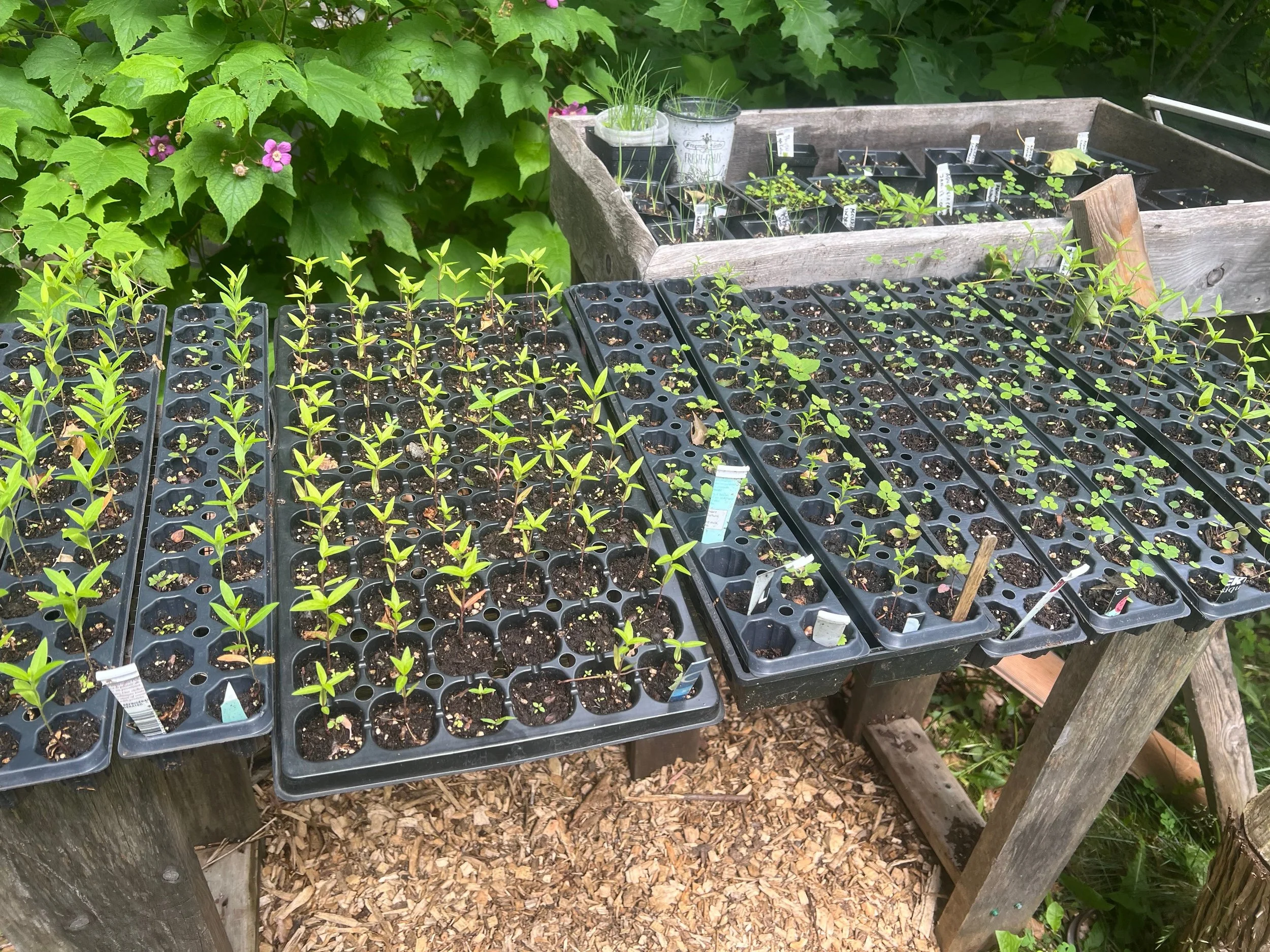
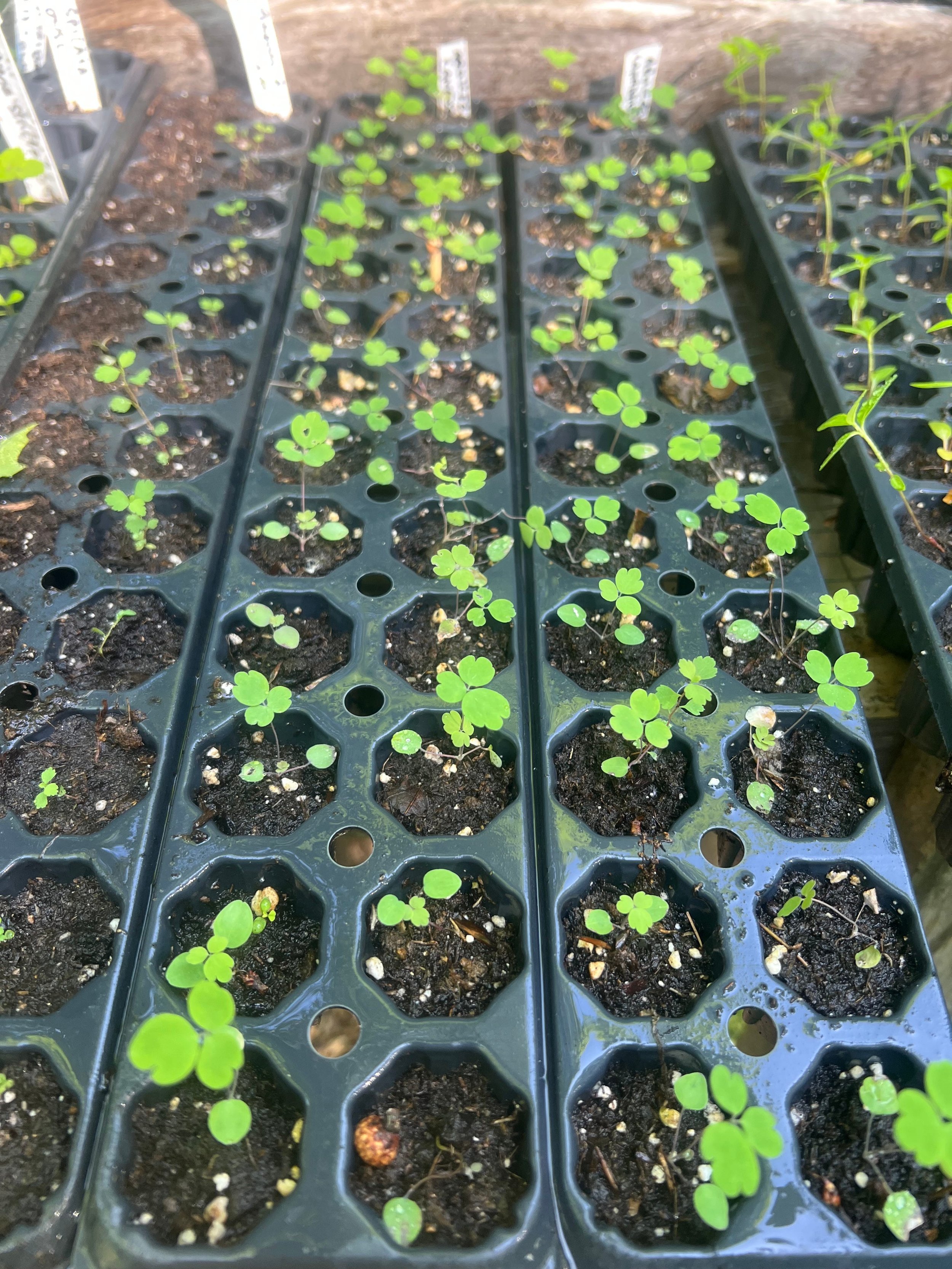
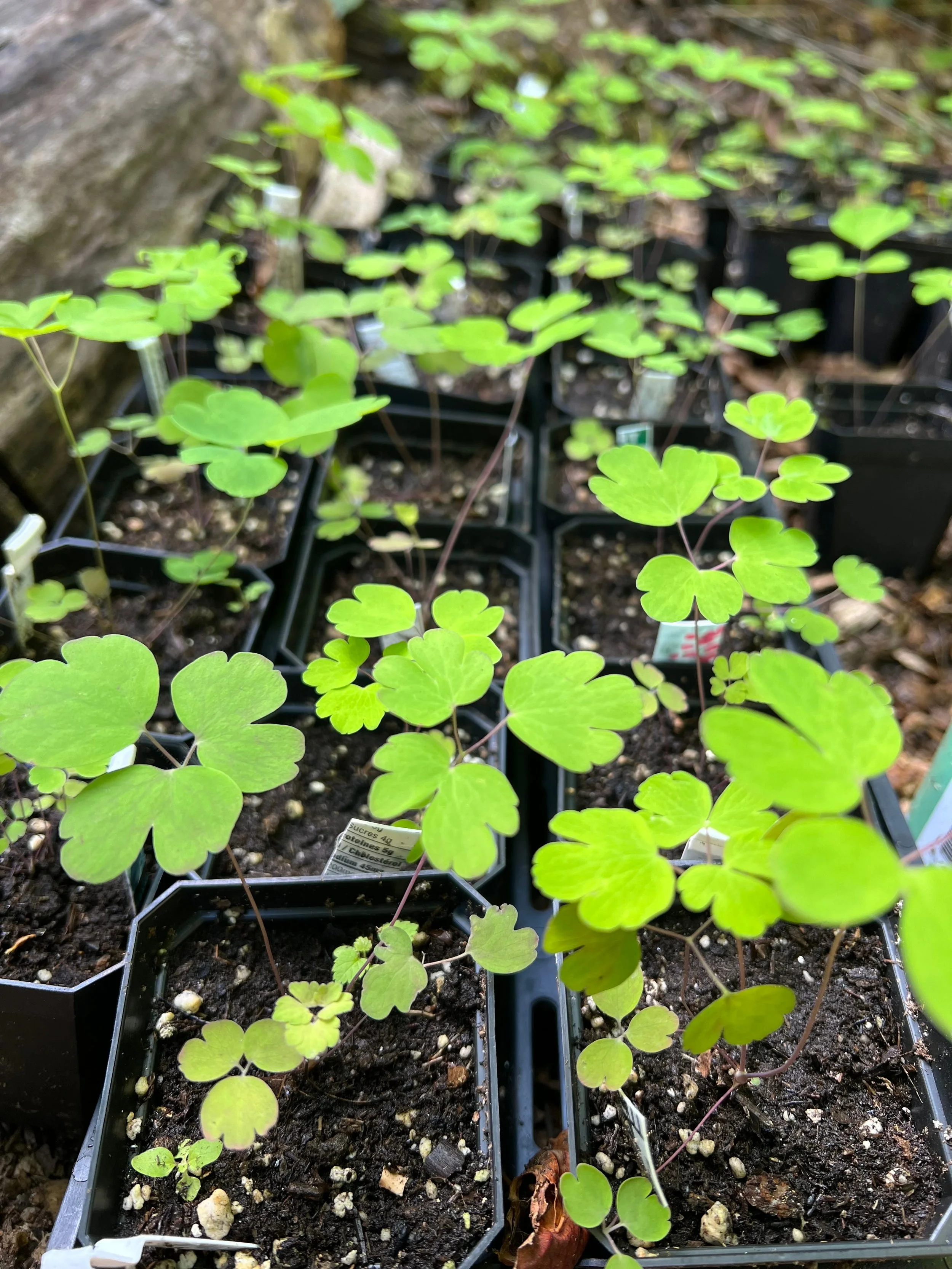
Some seeds being prepped for winter stratification and some seedlings that have sprouted and have been transplanted in the spring.
Plants are amazing!
They’ve been through a lot over the eons, and have crafted some pretty amazing adaptations for survival.
Some populations are struggling today, but with a bit of help from people who care, we can make sure they always have a place in their ecosystems.
Want some more info about how to successfully winter sow native plants? Send a message here and we’ll be happy to help you with your project!
Resources:
Native Plants: Canadian Wildlife Federation, Native Plant Connections (ON), Network of Nature, Northern Wildflowers, Ottawa Wildflower Seed Library, Reconnect Plant Nursery, Swallowtail Native Plants
NatureServe Explorer 2.0. (n.d.). https://explorer.natureserve.org/Taxon/ELEMENT_GLOBAL.2.132305/Iris_versicolor
Nilsson, C., Brown, R. L., Jansson, R., & Merritt, D. M. (2010). The role of hydrochory in structuring riparian and wetland vegetation. Biological Reviews/Biological Reviews of the Cambridge Philosophical Society, 85(4), 837–858. https://doi.org/10.1111/j.1469-185x.2010.00129.x
Ottawa Wildflower Seed Library: How to winter sow
Prairie Moon: How to germinate native seeds