
 Image 1 of 4
 Image 2 of 4
 Image 3 of 4
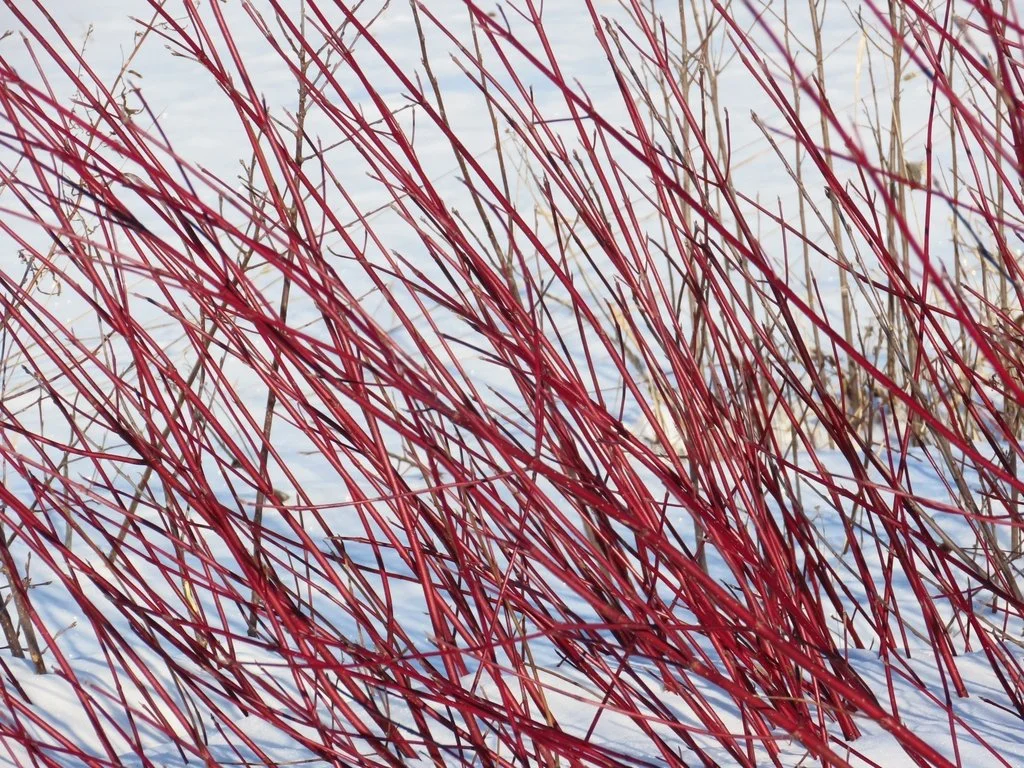 Image 4 of 4
A beautiful shrub for four seasons - its red stems persist into the winter and provide a stunning contrast to the snowy white surroundings. Clusters of white flowers form in the spring and persist through much of the summer. The berries don’t stay on the plant long, getting quickly snatched up by birds. This multi-stemmed shrub will slowly spread by suckers but is not aggressive. It prefers moist soil but does well in medium or dry soil, as long as it receives enough spring moisture. Full sun and part shade conditions are best, but it will grow in shade - just a bit slanted as it searches for the sun. A few of the oldest stems can be cut to the ground every few years to encourage new red shoots, but it is not necessary.
Ecological Importance: The flowers support many native bees including mining bees, bumble bees and sweat bees. Hummingbirds are supported by the nectar and they contribute to pollination during feedings. Leaf-cutter bees use small pieces of leaves for nesting material. The unicorn caterpillar, crocus geometer and the powdered dagger are a few of the many butterfly and moth species that use this as a host plant in their caterpillar stage. The berries support numerous birds including wood ducks, cardinals, orioles, yellow-bellied sapsuckers, warblers and grouse.
Sun Exposure: Sun, Partial Shade
Soil Moisture: Wet, Medium Wet, Medium, Medium-Dry
Height: up to 10 feet
Bloom Time: June, July, August
Bloom Colour: White
Available in a one gallon pot.
A beautiful shrub for four seasons - its red stems persist into the winter and provide a stunning contrast to the snowy white surroundings. Clusters of white flowers form in the spring and persist through much of the summer. The berries don’t stay on the plant long, getting quickly snatched up by birds. This multi-stemmed shrub will slowly spread by suckers but is not aggressive. It prefers moist soil but does well in medium or dry soil, as long as it receives enough spring moisture. Full sun and part shade conditions are best, but it will grow in shade - just a bit slanted as it searches for the sun. A few of the oldest stems can be cut to the ground every few years to encourage new red shoots, but it is not necessary.
Ecological Importance: The flowers support many native bees including mining bees, bumble bees and sweat bees. Hummingbirds are supported by the nectar and they contribute to pollination during feedings. Leaf-cutter bees use small pieces of leaves for nesting material. The unicorn caterpillar, crocus geometer and the powdered dagger are a few of the many butterfly and moth species that use this as a host plant in their caterpillar stage. The berries support numerous birds including wood ducks, cardinals, orioles, yellow-bellied sapsuckers, warblers and grouse.
Sun Exposure: Sun, Partial Shade
Soil Moisture: Wet, Medium Wet, Medium, Medium-Dry
Height: up to 10 feet
Bloom Time: June, July, August
Bloom Colour: White
Available in a one gallon pot.