
Outdoor winter decorations can brighten the long non-gardening months, but many are made with materials that aren’t great for wildlife or our ecosystems. Here’s what to avoid, and what to use instead.
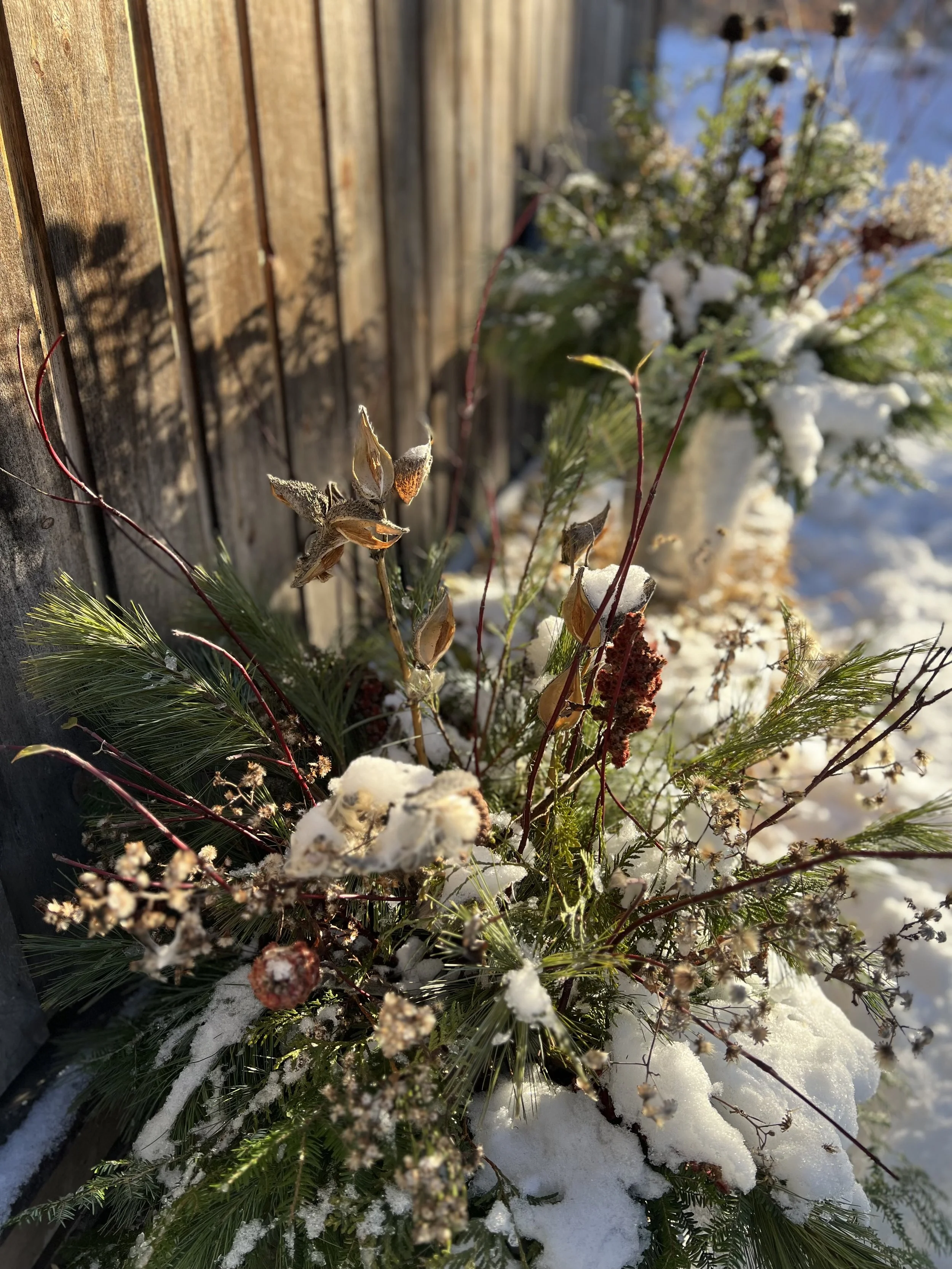
A simple mix of native plants to enjoy throughout the winter.
Now that December has arrived, stores are filling up with winter decorations, especially evergreen planters and wreaths that many people enjoy adding to their front doorways for a splash of greenery during the winter months. These planters look lovely under a fresh snowfall and can really help bring some cheer to the dark season.
Whether you’re making your own winter decorations or purchasing them from a store or service provider, it’s worth taking a closer look at the materials used to ensure they’re safe for wildlife and aren’t contributing unnecessary waste or introducing invasive species.
Plastics
Many winter decorations contain colourful plastic accents that jazz up the greenery, or mimic bright red winterberries. The Audubon Society warns that if fake berries look real to us, they can easily fool birds into eating them. Planters themselves are often sold in plastic containers. Unfortunately, all of these plastic materials will eventually degrade and end up in the landfill.
Better options:
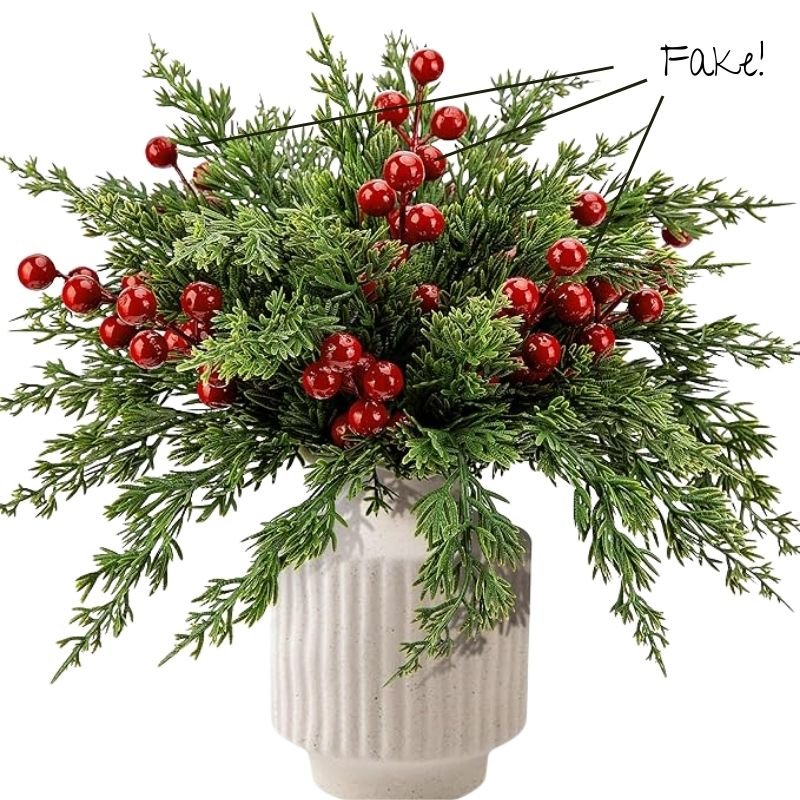
Artificial berries look lovely but can cause problems.
Planters made with real native berries. Be sure to use them sparingly in your decorations, to avoid overharvesting from the wild.
Decorations made from wood or other compostable materials. Paint them your favourite colours to personalize the look without creating waste.
If you’re buying a winter planter, look for one wrapped in burlap or another compostable material rather than a new plastic pot. Reuse any pots you already have from previous years to reduce waste.
Tip: Whatever container you use, make sure it has holes for drainage!
Invasive plants
It’s important to know which plant species you’re bringing to your property to avoid accidentally introducing invasive plants. Many of these species can spread aggressively in fields, forests, wetlands and backyards and become extremely difficult to control.
Common culprits found in winter decorations include:
Trailing plants like ivy and wintercreeper can take root even after disposal, displacing native plants in your ecosystem.
Berries like oriental bittersweet and burning bush look festive, but are easily spread by birds into natural areas where they germinate and form dense thickets.
Seed heads from plants like miscanthus grass and teasel are often used in decorations but they can carry thousands of seeds that are capable of spreading and degrading local biodiversity.
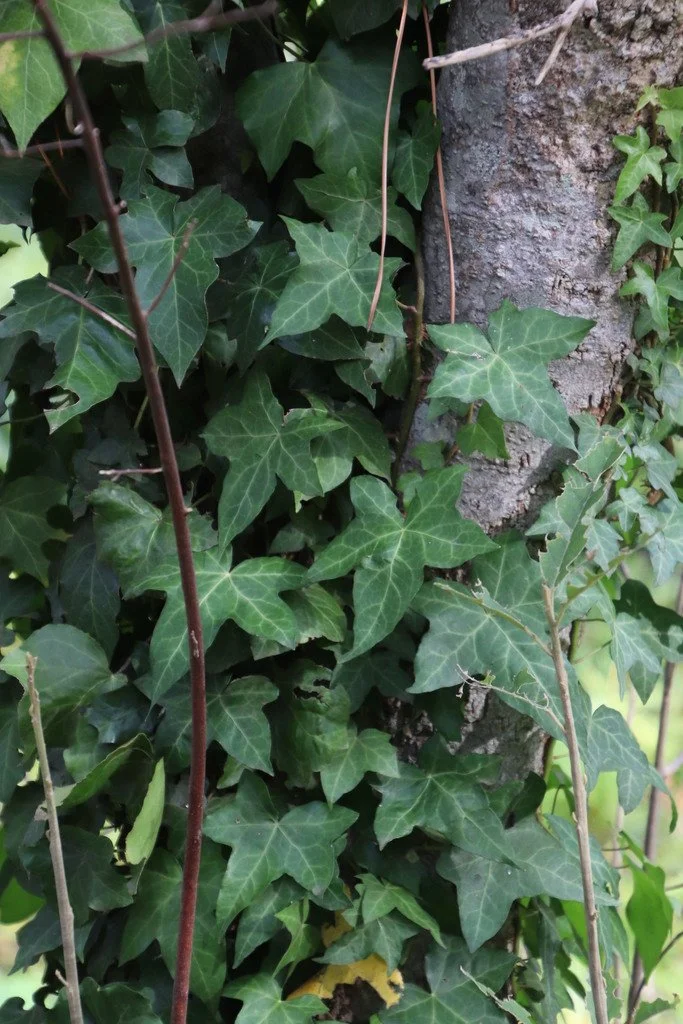


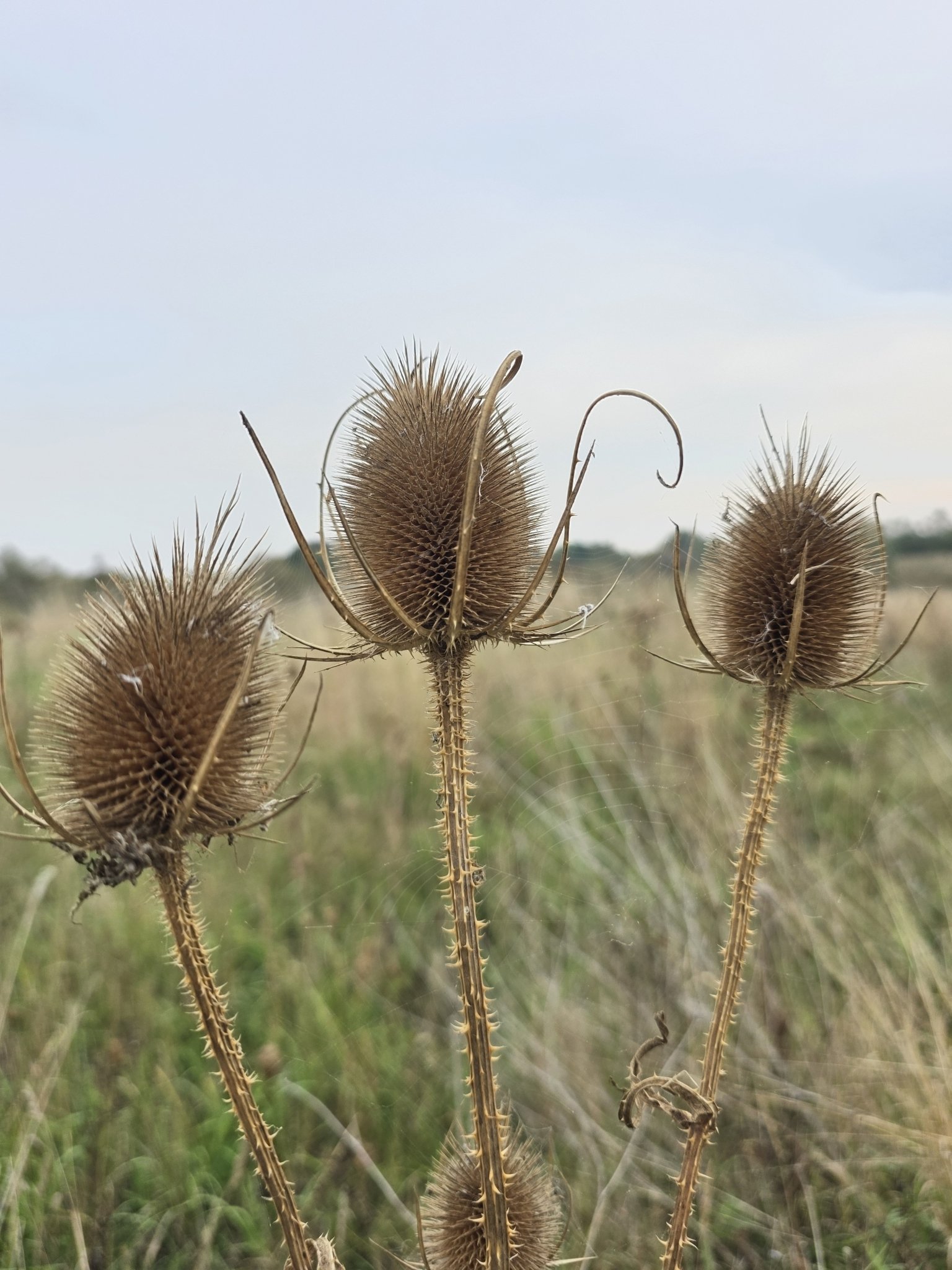
Invasive plants commonly used in winter planters: ivy, oriental bittersweet, burning bush and teasel. All of these plants are difficult to control once they’ve spread to natural areas.
If you find invasive plants in your decorations, do not put them in the compost. They must be disposed of safely - place them in sealed black plastic bags, solarize them in the sun until fully destroyed, and then put them in the municipal waste.
Better options:
Use native plants if you’re making your own decorations. These are safe for wildlife and won’t harm your local ecosystem. Sumac berries and red-twig dogwood add lovely red colours to arrangements, virgin’s bower clematis and evening primrose offer interesting seed heads, and pine, hemlock and cedar provide texture and greenery.
When collecting materials, harvest minimally. Follow the Society for Ecological Restoration’s guideline of taking no more than 10%. The plant population and local wildlife need the rest.
Why not grow your own materials? Add native shrubs that produce berries, perennial plants with sturdy seed heads, and if you have space, plant some coniferous trees! You’ll have a renewable supply for winter decorations for years to come - and you’ll be supporting biodiversity in your yard all year long.
Foam fillers
Foam is often recommended to DIYers as a filler inside winter pots that hold branches in place. Unfortunately, foam is a disposable product that breaks down into microplastics and eventually ends up in the landfill or is digested by wildlife (Trestrail et. al., 2020).
Better options:
Use soil or sand. Both can be reused or composted at the end of the season. If you’re hiring a service provider, request that they avoid foam and use soil or sand instead.
Depending on the size of your container, you might not need any filler at all - evergreen stems, when added at different angles, can weave together naturally and create a sturdy base for berries, seed heads and other decorative elements.
Winter decorations are a lovely addition to your home, bringing a cozy, warm feeling to the dark season. Taking a few extra minutes to make sure the materials you use are safe for wildlife and your ecosystem can make a meaningful difference.
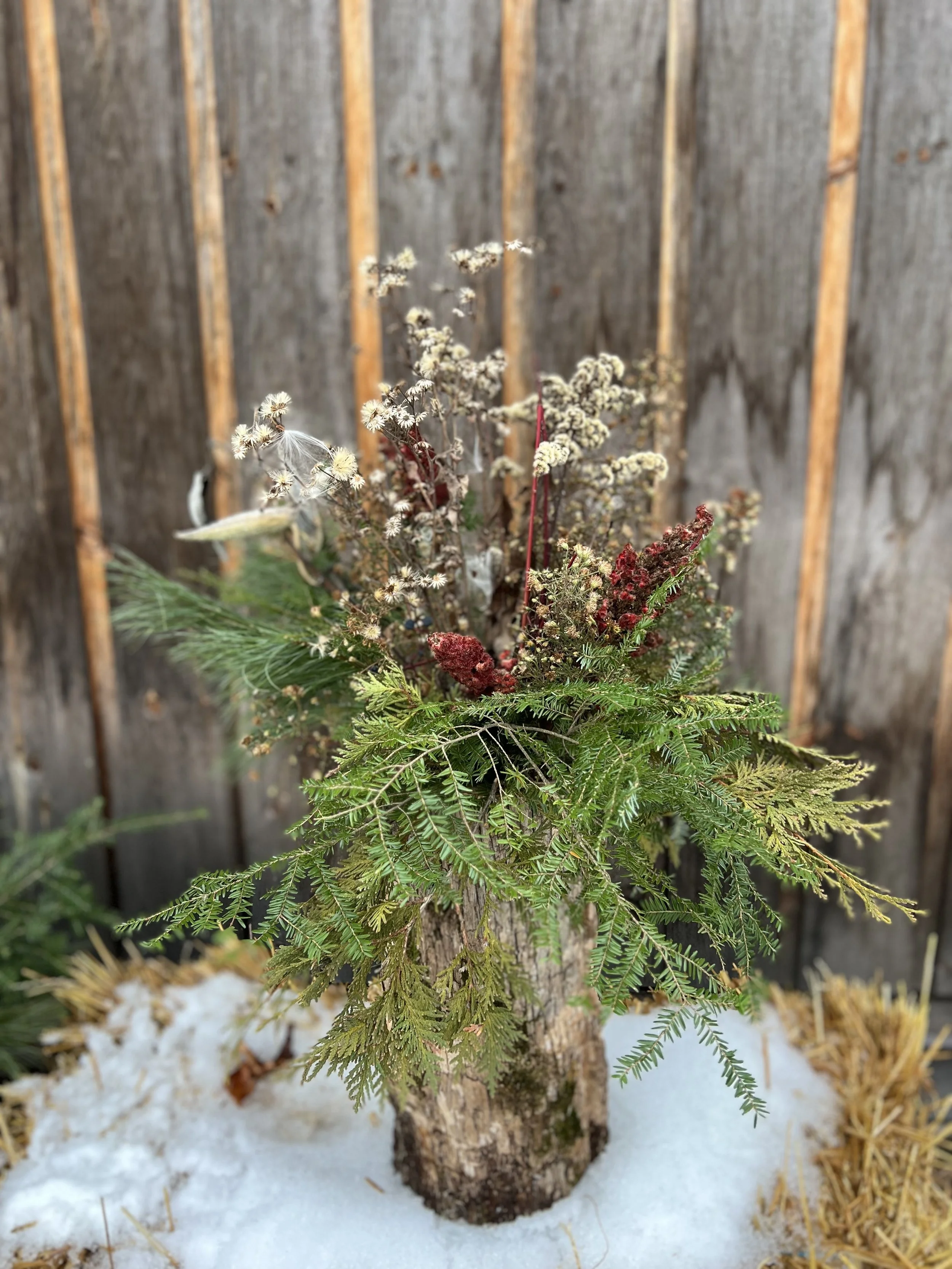
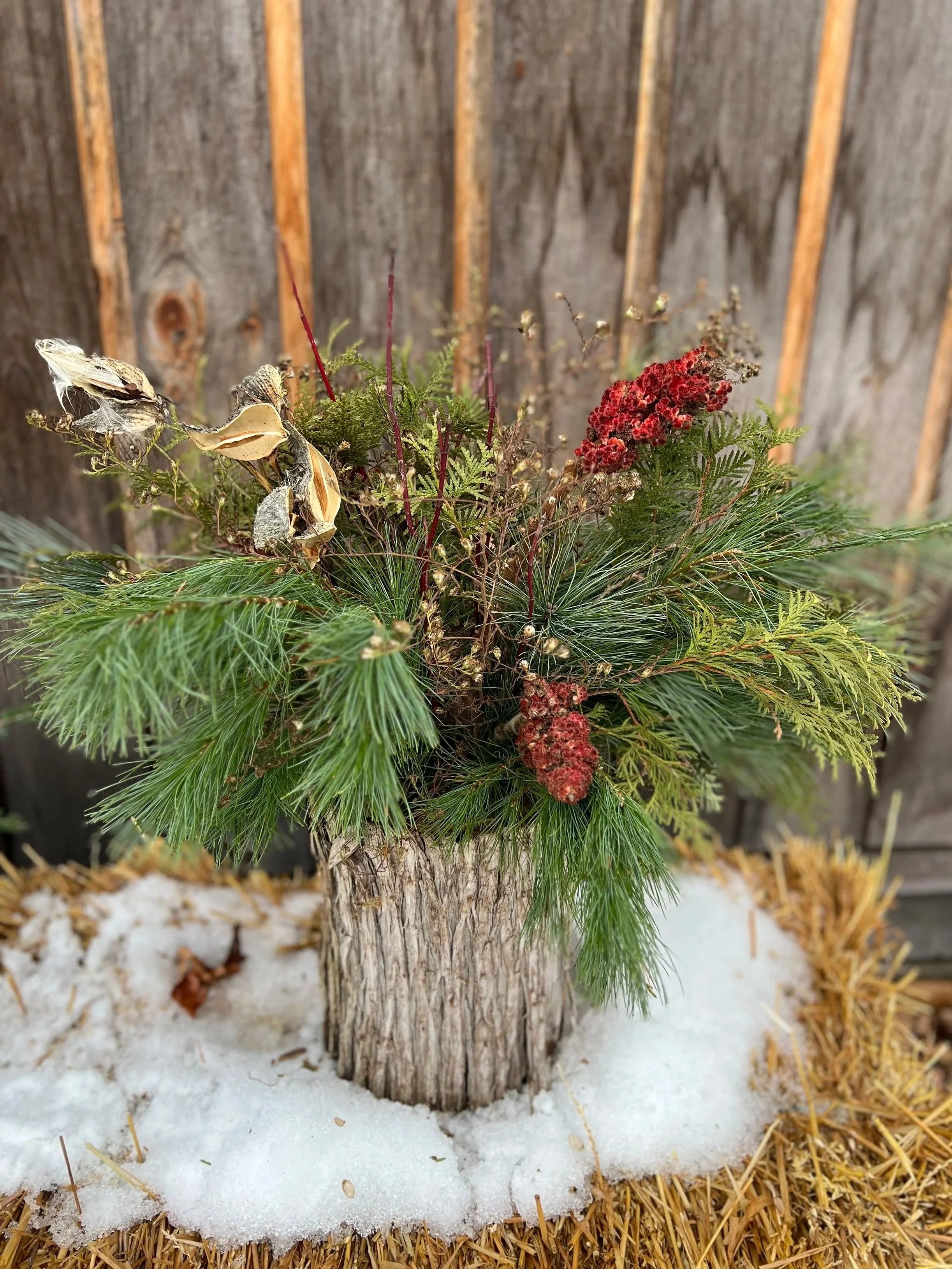
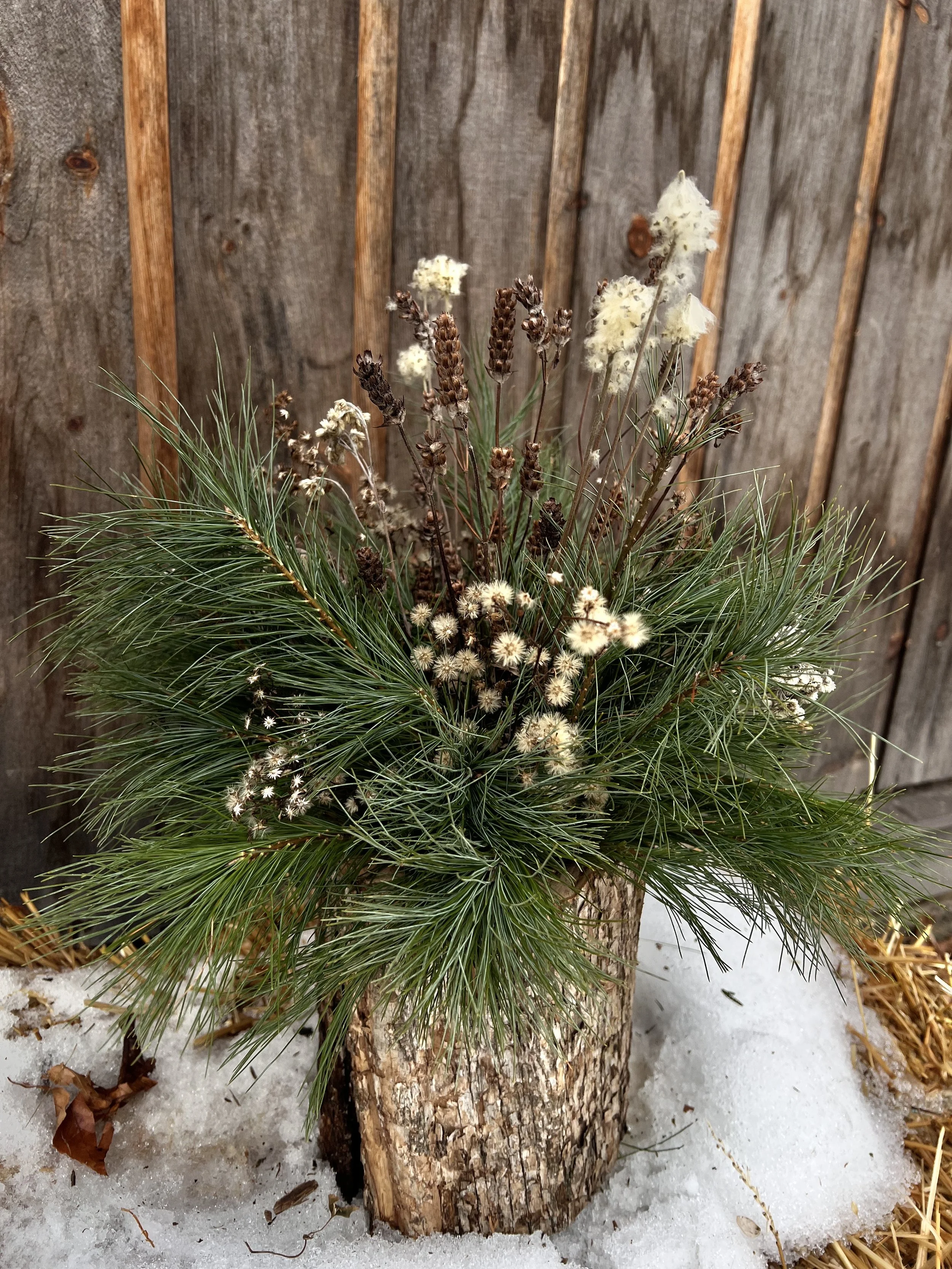
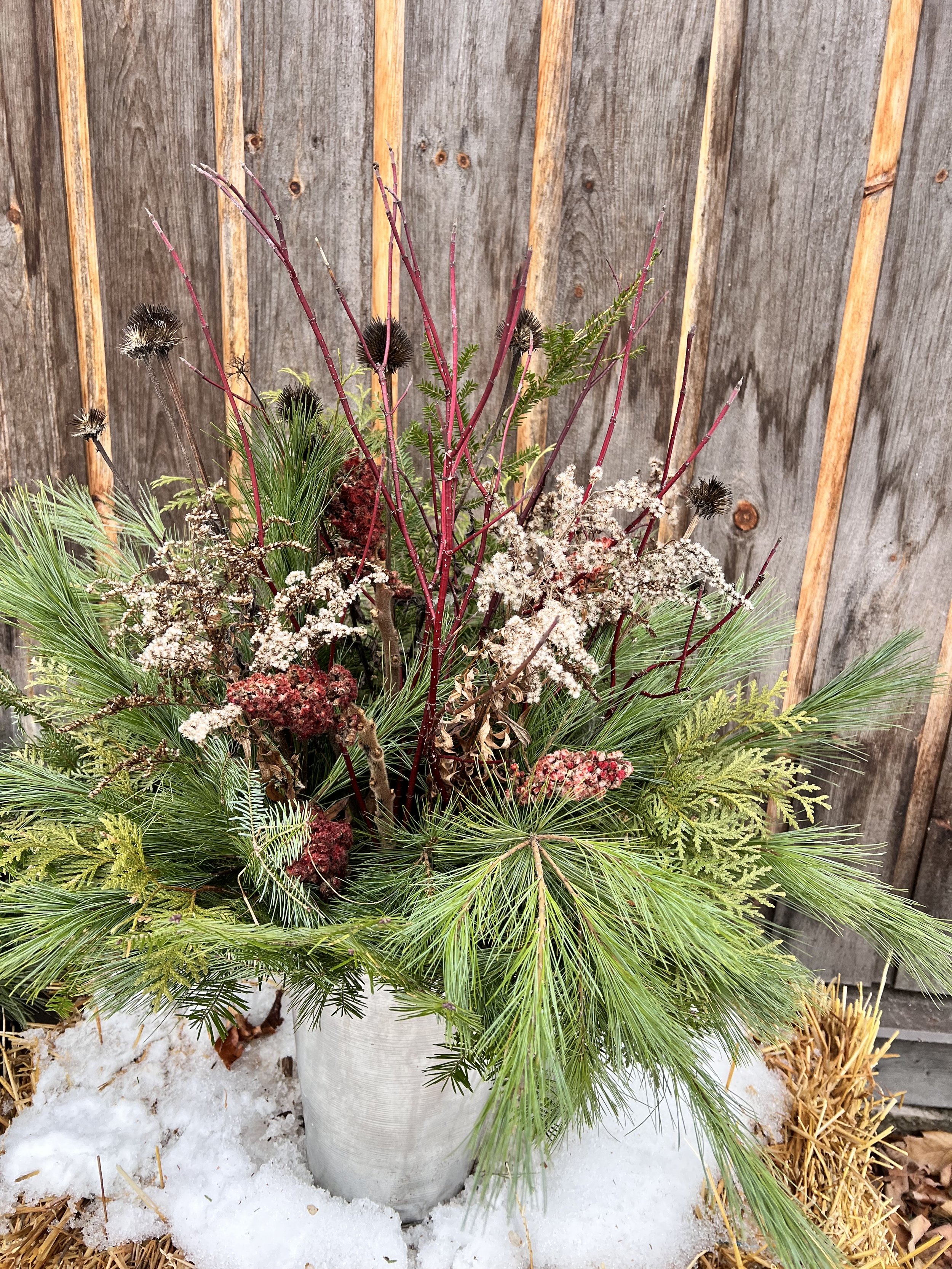
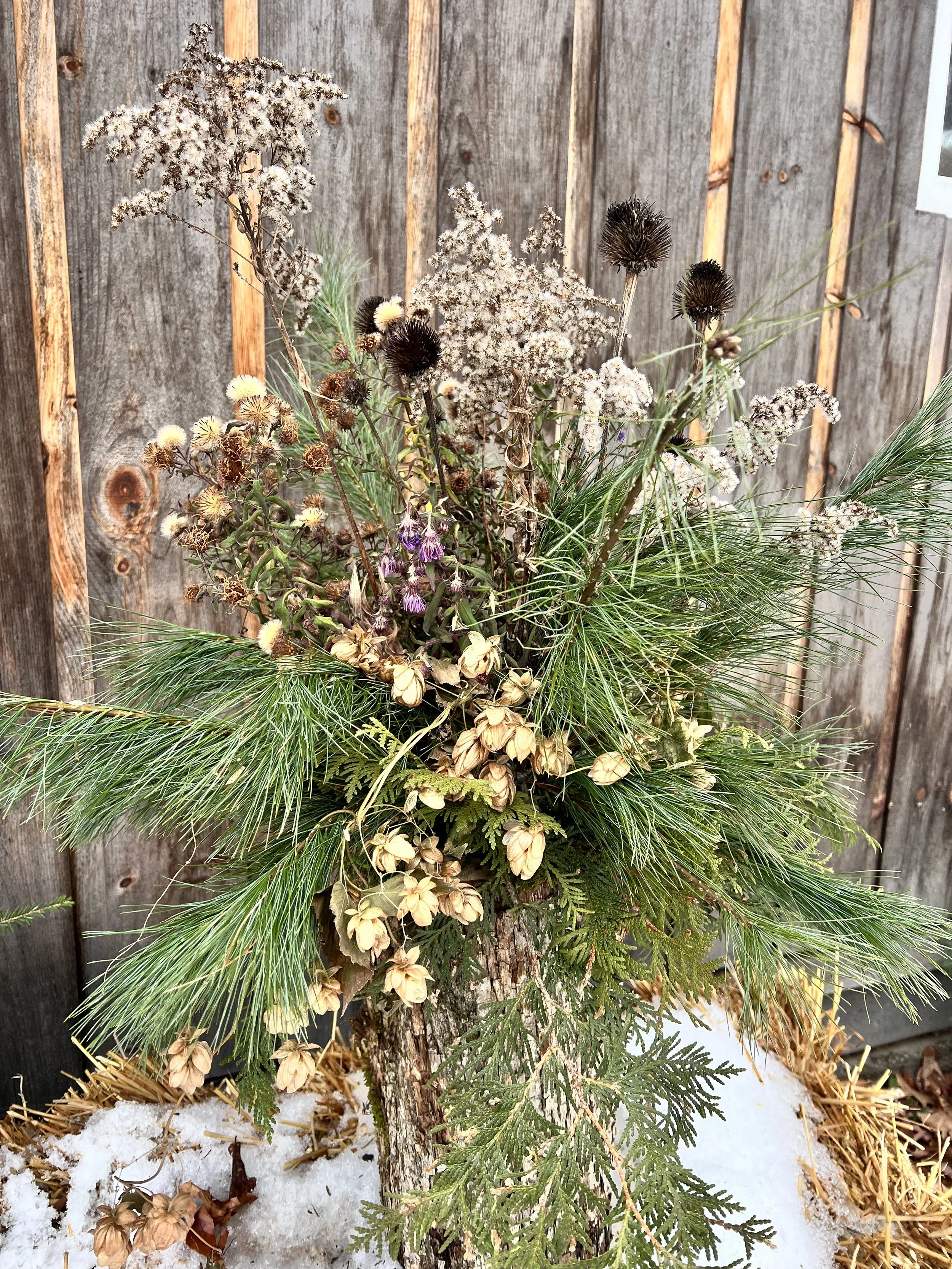
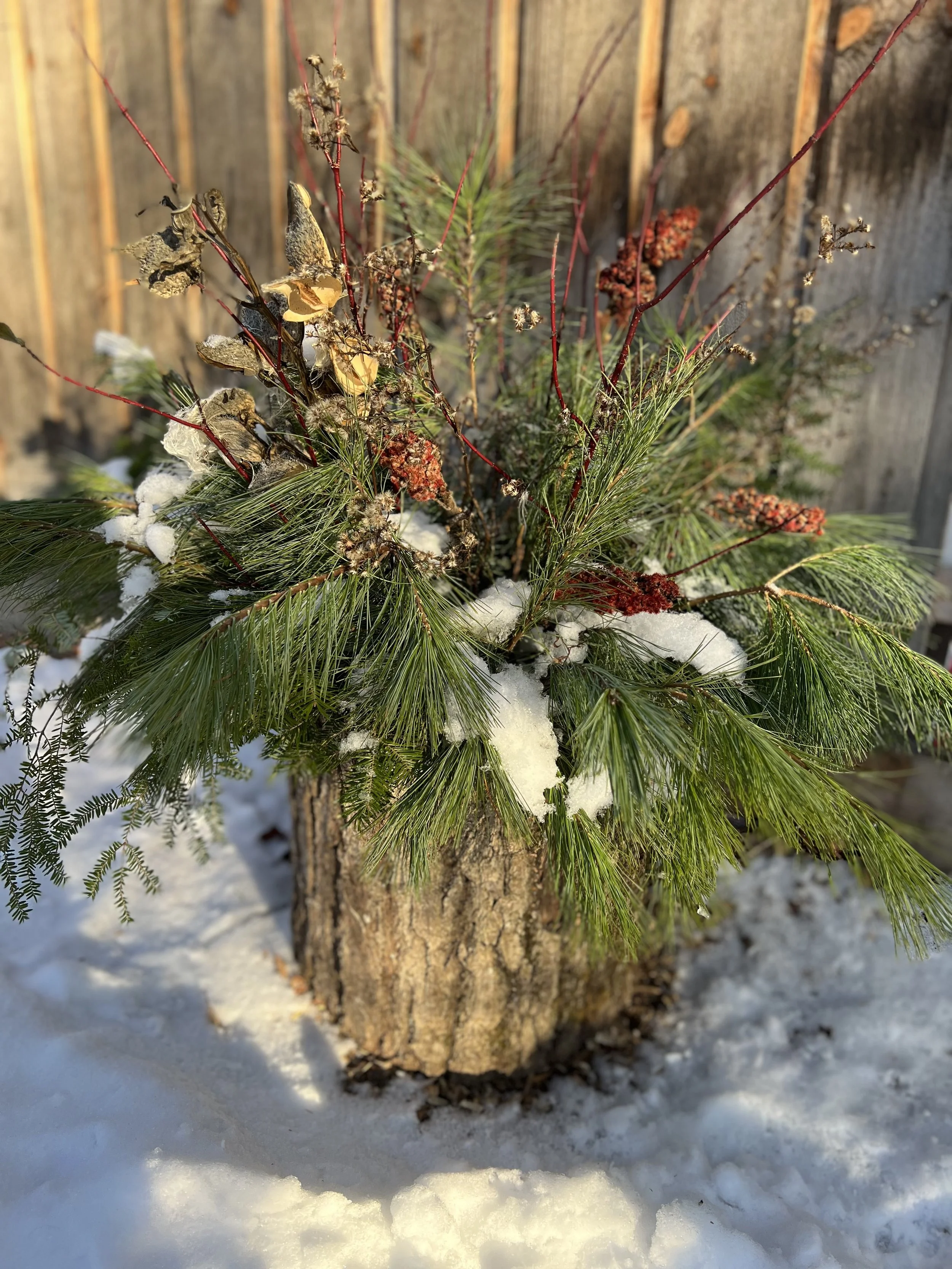
A few of our winter planters this year.
Reconnect’s small batch of native plant winter decorations will be available December 6th from 1-6 at the Magasin General La Peche Christmas Market!
Free from plastics, foam, and invasive species; everything in them can be composted or returned to the garden in spring.
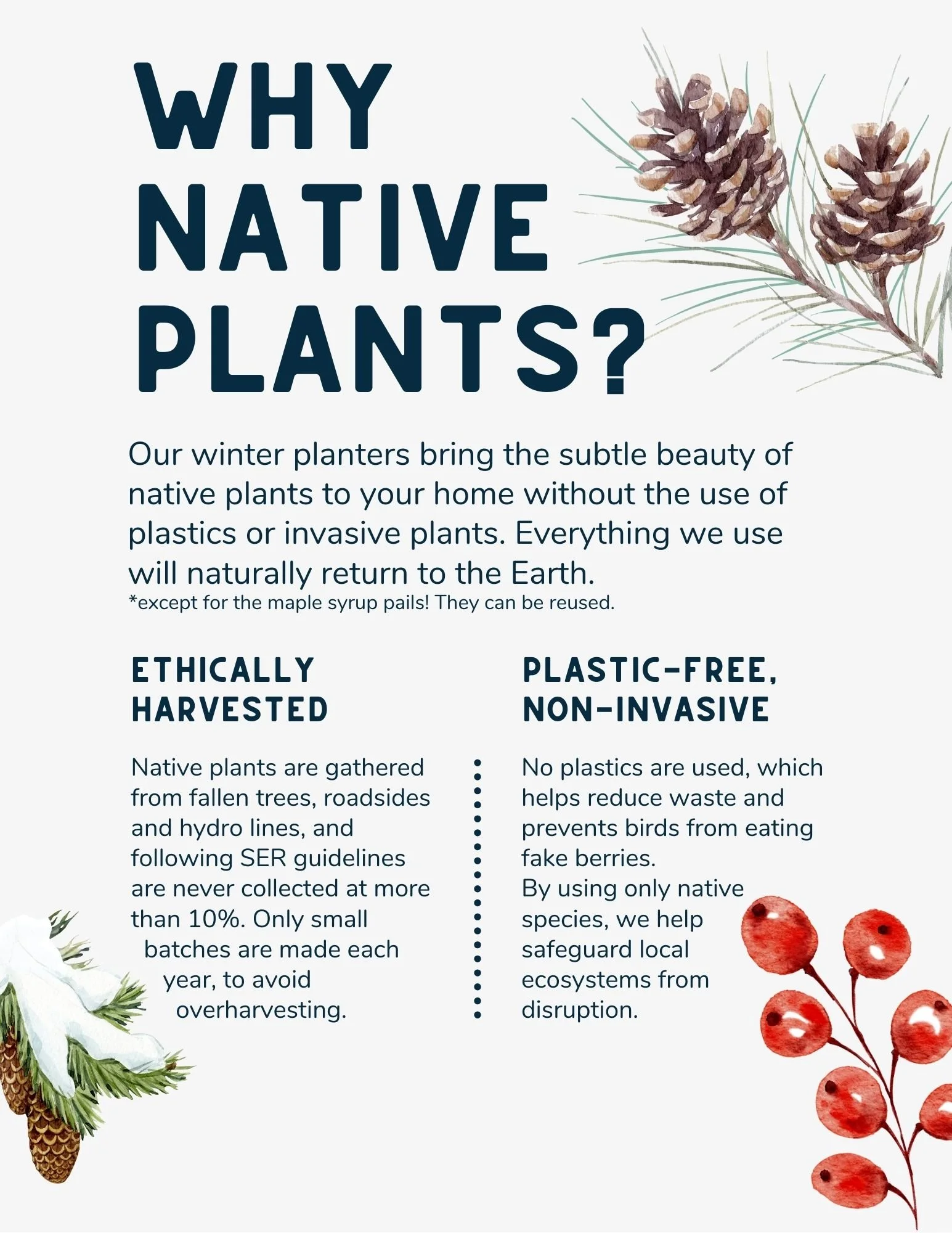
Would you like a customized winter planter at your house? Or some help selecting native plants for your landscape? Send a message here and we’ll be happy to help you out.
Resources:
Audubon Society: How Bird Friendly are your Holiday Decorations
Conservation Hamilton: Invasive Species and Holiday Decorations
Native Plants: Canadian Wildlife Federation, Native Plant Connections (ON), Network of Nature, Reconnect Plant Nursery
Trestrail, C., Walpitagama, M., Hedges, C., Truskewycz, A., Miranda, A., Wlodkowic, D., ... & Nugegoda, D. (2020). Foaming at the mouth: ingestion of floral foam microplastics by aquatic animals. Science of the Total Environment, 705, 135826. https://doi.org/10.1016/j.scitotenv.2019.135826