
Should all non-native garden plants be replaced with native ones?
Our garden plants can have a bigger impact on local biodiversity than we might think. Find out how chickadees can help us understand how much native vegetation our gardens need to support local wildlife.
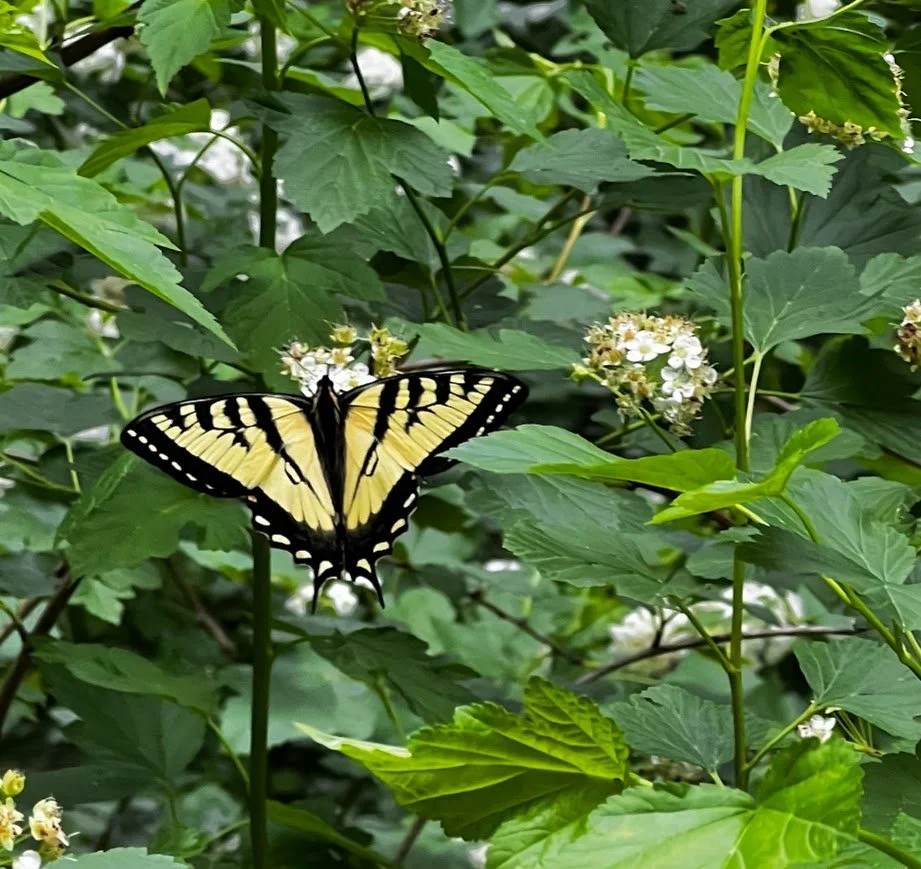
A swallowtail butterfly fueling up on ninebark flower nectar.
Let’s start by diving into the definitions of native, non-native, and invasive plants:
Native Plants
Native plants are considered indigenous to an area - in North America, that generally means that they existed here before European colonization. They have co-evolved with other species, predators, diseases and climate factors within their environment, and are an important part of a functioning ecosystem, providing essential food and shelter for wildlife.
Non-Native Plants
Non-native plants are ones that are not naturally occurring in an area but were introduced, intentionally or unintentionally, by humans. They have not co-evolved with the local ecosystem and while not necessarily harmful, they generally support less wildlife than native plants.
Invasive Plants
Invasive plants are non-native plants that reproduce aggressively, displacing native plant and wildlife species, and dramatically reducing local species diversity. They are considered invasive if they cause economic, ecological or cultural disruption.
Across North America, the conventional method of landscaping is based on using popular plants of the horticulture trade. Unfortunately, the majority of these plants are non-native and many are invasive.
However, as more people are learning about the destructiveness of invasive plants, we are starting to see a decline in invasive plant sales, with some nurseries removing them from their inventory and some voluntarily labelling them as invasive, informing customers about the risks of using these plants in their landscapes. Many municipalities are also pushing for more comprehensive lists of federally and provincially prohibited plants.
Invasive plants may look beautiful in the garden, but they contribute to the loss of biodiversity in natural ecosystems.
But what about non-invasive non-native plants? Plants that are not native to our region but do not spread aggressively or take over natural spaces? Plants like hostas, bearded irises, peonies, autumn joy sedums, hydrangea and so on. Should we worry about keeping them in our gardens?
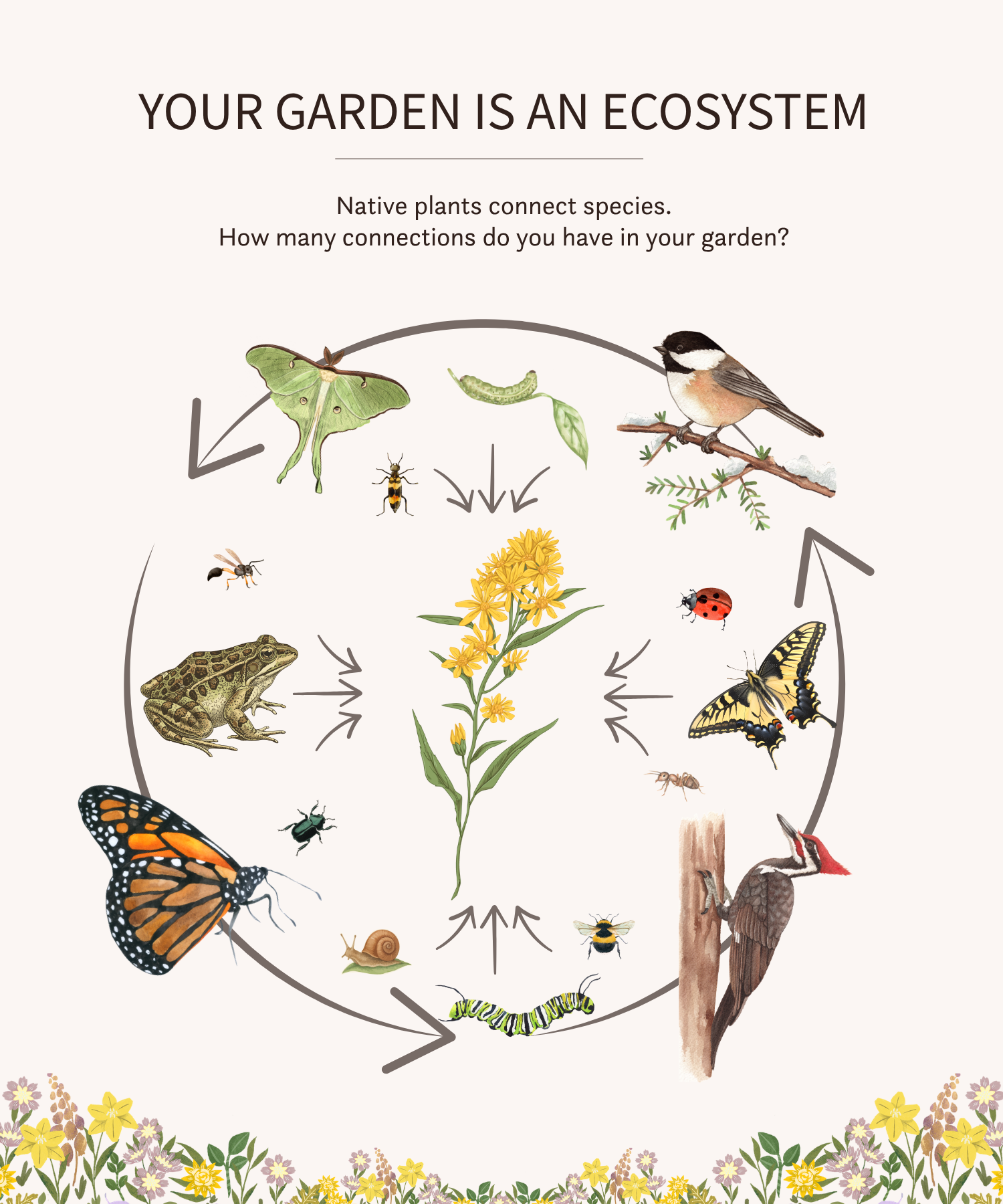
That depends. Native plants are well known for supporting more insects, birds and other wildlife than most non-native species. But the difference goes beyond the number of species they support. Native plants also contribute to something called interaction diversity.
This concept refers to the variety of relationships between living things in an ecosystem. Rather than simply counting the number of species present, interaction diversity looks at the connections between them: which insects feed on which plants, which birds eat those insects, which pollinators visit which flowers, and which species rely on one another for food, shelter, reproduction, and survival.
An ecosystem is more like a web than a collection of individual species. The more connections within that web, the stronger and more resilient it becomes.
The Carolina chickadee provides a good example of what happens when these ecological connections are weakened:
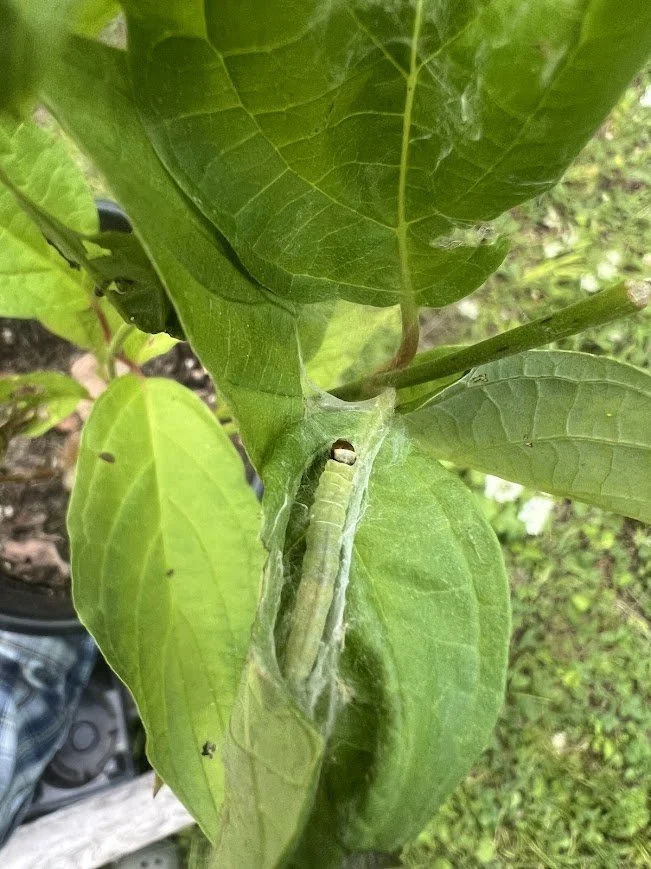
Carolina chickadee adults need to harvest an estimated 6,000-9,000 caterpillars in order to raise a single brood of young (Brewer, 1961). Many of these caterpillar species have specialized relationships with particular native host plants and can only feed and develop on those species.
Less host plants = less available caterpillars
In a 2018 study of chickadees, plants and suburban landscapes, Narango, Tallamy and Marra found that yards dominated with non-native plants supported fewer caterpillars than yards with more native plants. In those non-native yards where fewer caterpillars were available, chickadees shifted their diet toward other insects, were less likely to nest, and had lower reproductive success.
The researchers found that chickadee populations were unlikely to be sustainable when non-native plants made up more than 30% of the plant biomass.
This suggests that maintaining at least 70% native plant biomass is an important threshold for supporting insectivorous birds in residential landscapes.
This is interaction diversity in action - plants supporting insects, insects supporting birds and those connections supporting other species. Chickadees don’t directly need native plants, but the caterpillars they need to feed their young do.
A garden full of hostas isn’t necessarily causing harm, but it also isn’t supporting the insects that form the foundation of the food web.
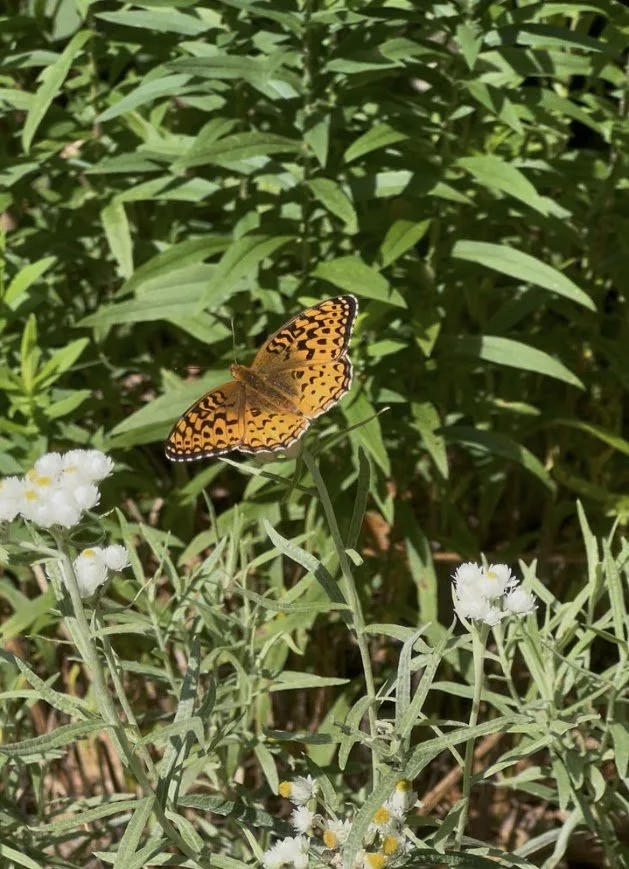
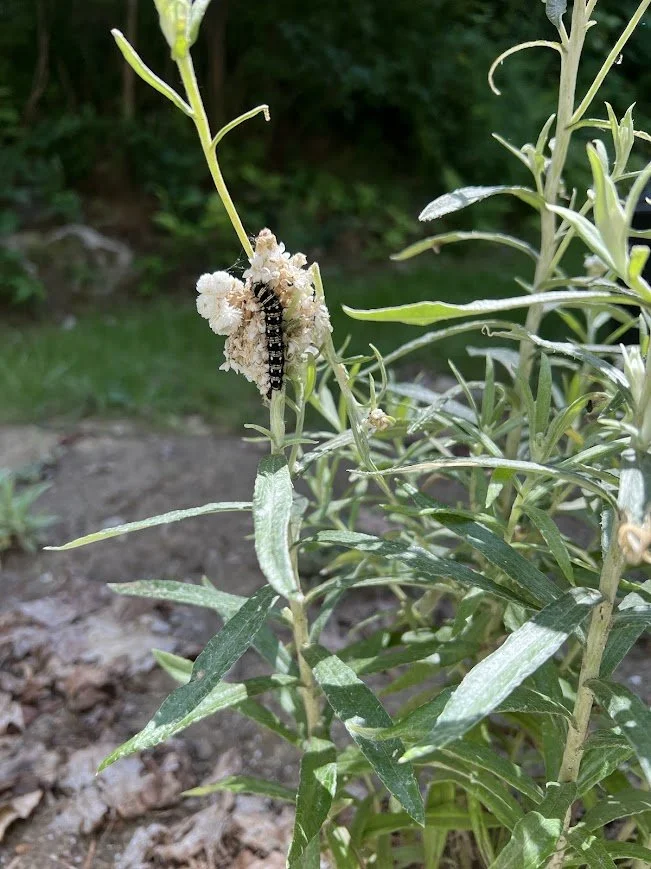
A fritillary feeds from a pearly everlasting flower, an important plant during its adult stage, while an American painted lady and an unknown species dine on pearly everlasting and red osier dogwood leaves. Interaction diversity in action!
I like to think of these plants as bird food factories - pumping out caterpillars all season long and providing enough sustenance to build baby birds’ strength up from helpless hatchling to feathered flyer.
This doesn’t mean that every non-native plant needs to be removed from our gardens. Instead, we can gradually shift the balance. A useful goal is to work toward at least 70% native vegetation, creating a landscape with enough native plants to support the insects, birds and other wildlife that depend on it.
We don’t have to transform our gardens overnight, but every native plant we add becomes a small food factory for another species, strengthening the connections that make our gardens part of a functioning ecosystem. Let the chickadees be your guide when deciding what to plant, what to keep and how to make your garden a more supportive part of the food web.
Thinking about increasing the interaction diversity on your property?
Contact us for help getting started on your project.
Resources:
Desiree Narango - Vermont Centre for Ecostudies
Douglas W. Tallamy - Nature’s Best Hope
Homegrown National Park - Local Plants and Services
Network of Nature - Connecting People to Plants Across Canada
Pollinator Partnership Canada - Native Plants by Ecoregion
References:
Brewer, R. (1961). Comparative notes on the life history of the Carolina Chickadee. The Wilson Bulletin 73:348–373.
Narango, D. L., Tallamy, D. W., & Marra, P. P. (2018). Nonnative plants reduce population growth of an insectivorous bird. PNAS, 115(45), 11549–11554.